Ambulance Drivers and Attendants, Except Emergency Medical Technicians in Minnesota
Want to work as an Ambulance Drivers and Attendants, Except Emergency Medical Technicians in Minnesota? Below are the key facts. Drive ambulance or assist ambulance driver in transporting sick, injured, or convalescent persons. Assist in lifting patients.
What do Ambulance Drivers and Attendants, Except Emergency Medical Technicians Make in Minnesota?
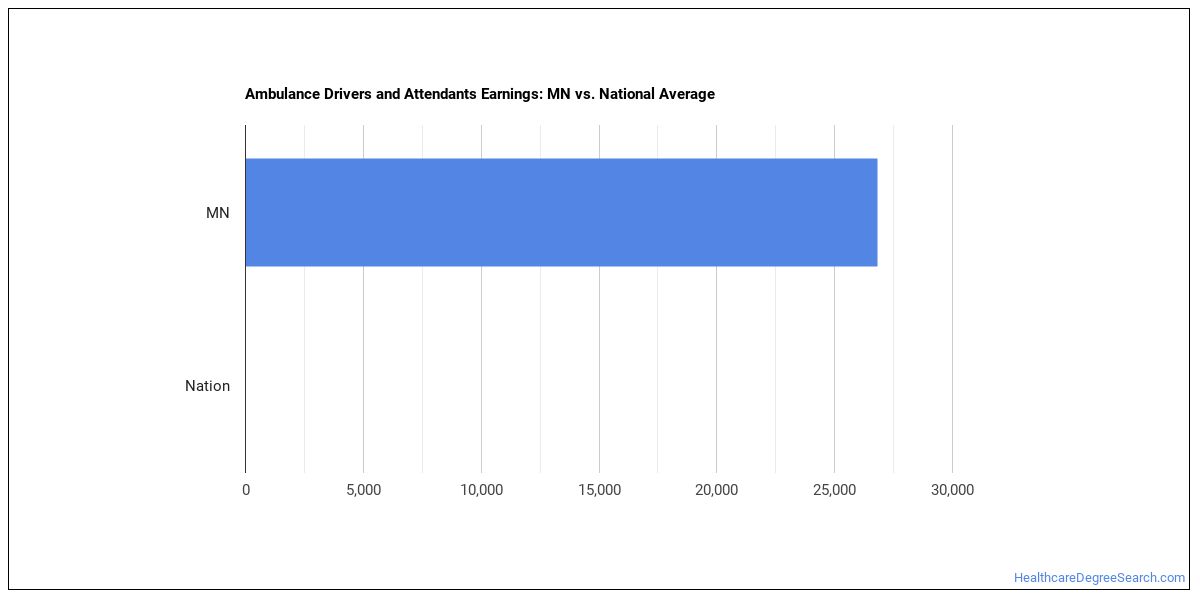
For a ambulance drivers and attendants, except emergency medical technicians working in Minnesota, the typical annual salary is $36,170 per year (or about $17.39/hour).Pay can range from $34,330 at the 10th percentile to $51,010 at the 90th percentile.
| Wage Statistic | Annual | Hourly |
|---|---|---|
| 10th percentile | $34,330 | $16.51 |
| 25th percentile | $36,160 | $17.39 |
| Median (50th) | $36,170 | $17.39 |
| 75th percentile | $41,870 | $20.13 |
| 90th percentile | $51,010 | $24.53 |

The job concentration index in Minnesota compared to the national average — is 0.40, indicating fewer ambulance drivers and attendants, except emergency medical technicians per worker than the national average.
National Wage Comparison
Nationally, ambulance drivers and attendants, except emergency medical technicians earn a median of $64,291 per year ($30.91/hour), below the Minnesota median.
Employment Outlook
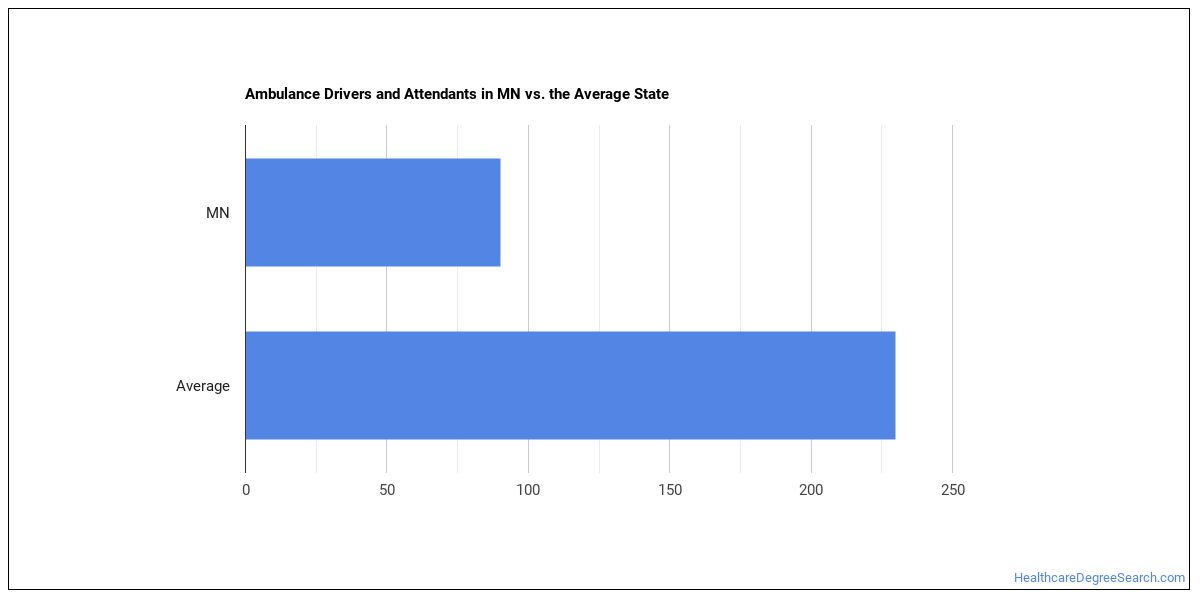
Nationally, total employment in this occupation is 1,361,811 ambulance drivers and attendants, except emergency medical technicians across the United States. In Minnesota alone, around 90 people work in this role. That’s below the typical state, which employs around 230 ambulance drivers and attendants, except emergency medical technicians.

Top States for Ambulance Drivers and Attendants, Except Emergency Medical Technicians Employment
The table below shows the states where the most ambulance drivers and attendants, except emergency medical technicians work.
| State | Number Employed |
|---|---|
| Pennsylvania | 1,550 |
| South Carolina | 1,010 |
| California | 850 |
| New York | 740 |
| Georgia | 550 |
| Illinois | 520 |
| Texas | 450 |
| Tennessee | 430 |
| Maryland | 350 |
| Mississippi | 350 |
| Indiana | 340 |
| Alabama | 330 |
| Ohio | 290 |
| Wisconsin | 290 |
| Florida | 270 |
| Puerto Rico | 260 |
| Virginia | 260 |
| West Virginia | 230 |
| Iowa | 230 |
| North Dakota | 200 |
Highest-Paying States for Ambulance Drivers and Attendants, Except Emergency Medical Technicians
These states pay the most for ambulance drivers and attendants, except emergency medical technicians.
| State | Annual Median Salary |
|---|---|
| Oklahoma | $43,490 |
| Washington | $40,560 |
| Oregon | $39,520 |
| Massachusetts | $39,440 |
| New Jersey | $39,200 |
| Florida | $38,340 |
| Maryland | $37,480 |
| California | $36,960 |
| Wisconsin | $36,750 |
| Colorado | $36,320 |
Skills
Key ambulance drivers and attendants, except emergency medical technicians skills, rated on an importance scale of 0 to 5:
Knowledge Areas
Core knowledge areas for this occupation, rated on an importance scale of 0 to 5:
Abilities
The abilities that matter most for ambulance drivers and attendants, except emergency medical technicians, rated on an importance scale of 0 to 5:
Daily Tasks
Day-to-day, ambulance drivers and attendants, except emergency medical technicians typically:
- Remove and replace soiled linens or equipment to maintain sanitary conditions.
- Drive ambulances or assist ambulance drivers in transporting sick, injured, or convalescent persons.
- Report facts concerning accidents or emergencies to hospital personnel or law enforcement officials.
- Place patients on stretchers, and load stretchers into ambulances, usually with assistance from other attendants.
- Accompany and assist emergency medical technicians on calls.
- Replace supplies and disposable items on ambulances.
- Perform minor maintenance on emergency medical services vehicles, such as ambulances.
- Clean and wash rigs, ambulances, or equipment.
- Earn and maintain appropriate certifications.
- Administer first aid, such as bandaging, splinting, or administering oxygen.
- Restrain or shackle violent patients.
Work Activities
- Assisting and Caring for Others
- Operating Vehicles, Mechanized Devices, or Equipment
- Getting Information
- Documenting/Recording Information
- Performing for or Working Directly with the Public
- Inspecting Equipment, Structures, or Materials
- Performing General Physical Activities
- Identifying Objects, Actions, and Events
- Interpreting the Meaning of Information for Others
- Updating and Using Relevant Knowledge
- Monitoring Processes, Materials, or Surroundings
- Establishing and Maintaining Interpersonal Relationships
Tools & Technology
Common tools and software used in this occupation include: Hot technologies: Microsoft Excel
What Major Will Prepare You For This Career?
Programs that train for this career include:
- Allied Health Services
Featured schools near , edit
Related Careers
Careers similar to ambulance drivers and attendants, except emergency medical technicians include:
- Medical and Health Services Managers
- Emergency Management Directors
- Anesthesiologist Assistants
- Registered Nurses
- Acute Care Nurses
- Emergency Medicine Physicians
Also Known As
Ambulance Attendant, Ambulance Driver, CPR Ambulance Driver (Cardio Pulmonary Resuscitation Ambulance Driver), Care Attendant, Certified Emergency Vehicle Technician (CEV Technician), Chair Car Driver, Class B Driver, Driver, Driver Medic, EMS Driver (Emergency Medical Services Driver), EMS First Responder (Emergency Medical Services First Responder), EMS Medic (Emergency Medical Services Medic), Emergency Care Attendant (ECA), Emergency Medical Vehicle Operator, Emergency Vehicle Operations Instructor.
References
- U.S. Bureau of Labor Statistics, Occupational Employment and Wage Statistics — https://www.bls.gov/oes/
- O*NET Online — https://www.onetonline.org/
- BLS Employment Projections — https://www.bls.gov/emp/
- O*NET-SOC code: 53-3011.00

HealthcareDegreeSearch.com provides higher-education, college and university, degree, program, career, salary, and other helpful information to students, faculty, institutions, and other internet audiences. Presented information and data are subject to change. Inclusion on this website does not imply or represent a direct relationship with the company, school, or brand. Information, though believed correct at time of publication, may not be correct, and no warranty is provided. Contact the schools to verify any information before relying on it. Financial aid may be available for those who qualify. The displayed options may include sponsored or recommended results, not necessarily based on your preferences.
© HealthcareDegreeSearch.com – All Rights Reserved.