Nuclear Medicine Technologists in North Dakota
Thinking about a career as a Nuclear Medicine Technologists in North Dakota? Here’s what you need to know. Prepare, administer, and measure radioactive isotopes in therapeutic, diagnostic, and tracer studies using a variety of radioisotope equipment. Prepare stock solutions of radioactive materials and calculate doses to be administered by radiologists. Subject patients to radiation. Execute blood volume, red cell survival, and fat absorption studies following standard laboratory techniques.
What do Nuclear Medicine Technologists Make in North Dakota?
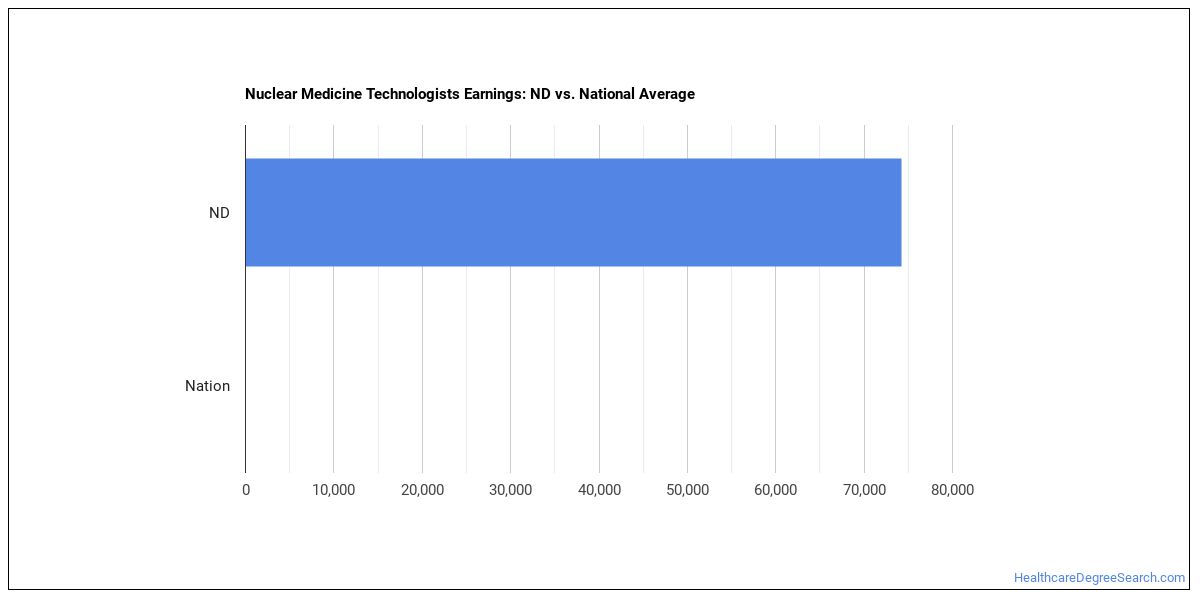
The nuclear medicine technologists working in North Dakota, wages run about $98,730 per year (or roughly $47.47/hour).Pay can range from $73,350 at the 10th percentile to $110,790 at the 90th percentile.
| Wage Statistic | Annual | Hourly |
|---|---|---|
| 10th percentile | $73,350 | $35.26 |
| 25th percentile | $77,030 | $37.03 |
| Median (50th) | $98,730 | $47.47 |
| 75th percentile | $101,970 | $49.02 |
| 90th percentile | $110,790 | $53.27 |

The job concentration index in North Dakota nationwide is 1.08.
National Wage Comparison
Nationally, nuclear medicine technologists earn a median of $119,042 per year ($57.23/hour), below the North Dakota median.
Employment Outlook
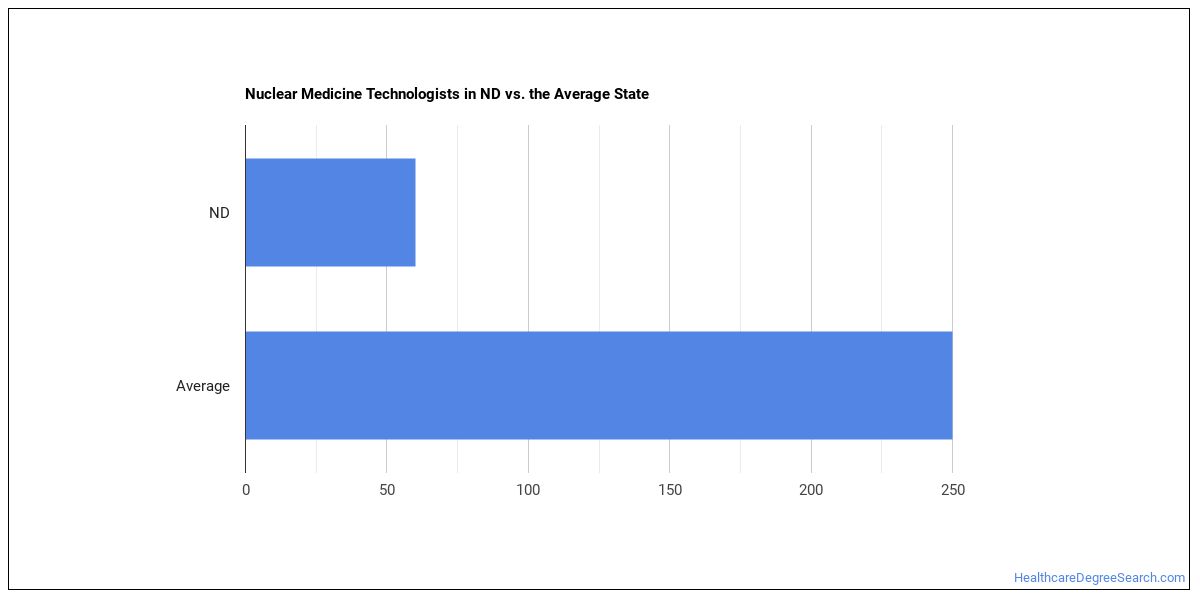
Nationally, total employment in this occupation is 1,364,528 nuclear medicine technologists nationwide. In North Dakota alone, around 50 people work in this role. That’s fewer than the typical state, which employs around 200 nuclear medicine technologists.

Top States for Nuclear Medicine Technologists Employment
These states have the highest employment of nuclear medicine technologists work.
| State | Number Employed |
|---|---|
| Florida | 1,740 |
| California | 1,380 |
| Texas | 1,040 |
| New York | 940 |
| Ohio | 790 |
| Pennsylvania | 720 |
| New Jersey | 660 |
| Illinois | 650 |
| Michigan | 590 |
| Georgia | 550 |
| North Carolina | 530 |
| Arizona | 510 |
| Virginia | 440 |
| Tennessee | 430 |
| Wisconsin | 420 |
| Maryland | 390 |
| Alabama | 340 |
| Missouri | 340 |
| Massachusetts | 330 |
| Washington | 310 |
Highest-Paying States for Nuclear Medicine Technologists
The highest-paying states for nuclear medicine technologists.
| State | Annual Median Salary |
|---|---|
| California | $155,220 |
| Hawaii | $124,380 |
| Washington | $121,090 |
| District of Columbia | $114,750 |
| New Jersey | $111,000 |
| Oregon | $110,600 |
| Massachusetts | $110,340 |
| New York | $109,020 |
| Colorado | $108,900 |
| Rhode Island | $107,950 |
Skills
Top nuclear medicine technologists skills, rated on an importance scale of 0 to 5:
Knowledge Areas
Core knowledge areas for this occupation, rated on an importance scale of 0 to 5:
Abilities
Top abilities for nuclear medicine technologists, rated on an importance scale of 0 to 5:
Daily Tasks
Day-to-day, nuclear medicine technologists typically:
- Administer radiopharmaceuticals or radiation intravenously to detect or treat diseases, using radioisotope equipment, under direction of a physician.
- Detect and map radiopharmaceuticals in patients' bodies, using a camera to produce photographic or computer images.
- Process cardiac function studies, using computer.
- Calculate, measure, and record radiation dosage or radiopharmaceuticals received, used, and disposed, using computer and following physician's prescription.
- Record and process results of procedures.
- Produce a computer-generated or film image for interpretation by a physician.
- Prepare stock radiopharmaceuticals, adhering to safety standards that minimize radiation exposure to workers and patients.
- Explain test procedures and safety precautions to patients and provide them with assistance during test procedures.
- Perform quality control checks on laboratory equipment or cameras.
- Dispose of radioactive materials and store radiopharmaceuticals, following radiation safety procedures.
- Gather information on patients' illnesses and medical history to guide the choice of diagnostic procedures for therapy.
- Maintain and calibrate radioisotope and laboratory equipment.
Work Activities
- Assisting and Caring for Others
- Working with Computers
- Documenting/Recording Information
- Updating and Using Relevant Knowledge
- Getting Information
- Performing for or Working Directly with the Public
- Evaluating Information to Determine Compliance with Standards
- Establishing and Maintaining Interpersonal Relationships
- Communicating with Supervisors, Peers, or Subordinates
- Inspecting Equipment, Structures, or Materials
- Controlling Machines and Processes
- Monitoring Processes, Materials, or Surroundings
Tools & Technology
Common tools and software used in this occupation include: Hot technologies: MEDITECH software
What Major Will Prepare You For This Career?
Several college majors map to this occupation:
- Allied Health Professions
Featured schools near , edit
Related Careers
Related occupations to nuclear medicine technologists include:
- Nuclear Monitoring Technicians
- Anesthesiologist Assistants
- Radiation Therapists
- Cardiologists
- Emergency Medicine Physicians
- Radiologists
Also Known As
Certified Nuclear Medicine Technologist (CNMT), Isotope Technician, Isotope Technologist, Medical Radiation Dosimetrist, Nuclear Cardiology Technologist, Nuclear Medical Technologist, Nuclear Medicine PET-CT Technologist (Nuclear Medicine Positron Emission Tomography - Computed Tomography Technologist), Nuclear Medicine Technician, Nuclear Medicine Technologist (NMT), Nuclear Technologist, PET Technologist (Positron Emission Tomography Technologist), Radiation Safety Officer, Radioisotope Technician, Radioisotope Technologist, Registered Nuclear Medicine Technologist.
References
- U.S. Bureau of Labor Statistics, Occupational Employment and Wage Statistics — https://www.bls.gov/oes/
- O*NET Online — https://www.onetonline.org/
- BLS Employment Projections — https://www.bls.gov/emp/
- O*NET-SOC code: 29-2033.00

HealthcareDegreeSearch.com provides higher-education, college and university, degree, program, career, salary, and other helpful information to students, faculty, institutions, and other internet audiences. Presented information and data are subject to change. Inclusion on this website does not imply or represent a direct relationship with the company, school, or brand. Information, though believed correct at time of publication, may not be correct, and no warranty is provided. Contact the schools to verify any information before relying on it. Financial aid may be available for those who qualify. The displayed options may include sponsored or recommended results, not necessarily based on your preferences.
© HealthcareDegreeSearch.com – All Rights Reserved.