Psychiatric Technicians in South Carolina
Want to work as a Psychiatric Technicians in South Carolina? Here’s what you need to know. Care for individuals with mental or emotional conditions or disabilities, following the instructions of physicians or other health practitioners. Monitor patients’ physical and emotional well-being and report to medical staff. May participate in rehabilitation and treatment programs, help with personal hygiene, and administer oral or injectable medications.
What do Psychiatric Technicians Make in South Carolina?
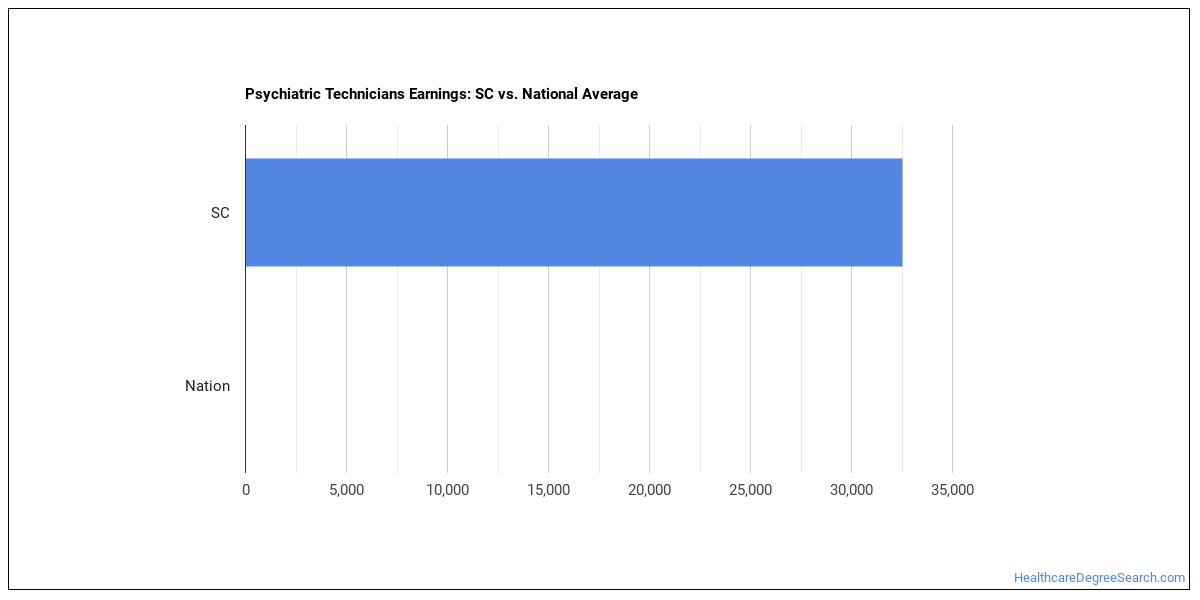
For psychiatric technicians working in South Carolina, the typical annual salary is $38,540 per year (or roughly $18.53/hour).Annual wages span from $32,520 at the 10th percentile to $43,640 at the 90th percentile.
| Wage Statistic | Annual | Hourly |
|---|---|---|
| 10th percentile | $32,520 | $15.63 |
| 25th percentile | $33,750 | $16.22 |
| Median (50th) | $38,540 | $18.53 |
| 75th percentile | $39,730 | $19.10 |
| 90th percentile | $43,640 | $20.98 |

The job concentration index in South Carolina nationwide is 0.47, meaning fewer psychiatric technicians per worker than the national average.
National Wage Comparison
Nationally, psychiatric technicians earn a median of $52,472 per year ($25.23/hour), below the South Carolina median.
Employment Outlook
There are roughly 450,959 psychiatric technicians nationwide. In South Carolina alone, about 950 people work in this role. That’s below the typical state, which employs around 1,630 psychiatric technicians.


Top South Carolina Metros for Psychiatric Technicians
The metro areas below employ the most psychiatric technicians in South Carolina.
| Metro Area | Number Employed | Annual Median Salary |
|---|---|---|
| Columbia, SC | 350 | $37,020 |
| Charleston-North Charleston, SC | 160 | $38,950 |
| Myrtle Beach-Conway-North Myrtle Beach, SC | 70 | $37,360 |
Top States for Psychiatric Technicians Employment
These states have the highest employment of psychiatric technicians work.
| State | Number Employed |
|---|---|
| Florida | 14,080 |
| Texas | 11,530 |
| California | 8,830 |
| Pennsylvania | 7,790 |
| Arizona | 7,510 |
| Illinois | 6,770 |
| Indiana | 6,630 |
| Michigan | 5,060 |
| North Carolina | 4,940 |
| Missouri | 4,650 |
| Wisconsin | 4,360 |
| Virginia | 4,350 |
| Georgia | 3,920 |
| Massachusetts | 3,600 |
| Tennessee | 3,490 |
| Alabama | 2,860 |
| Ohio | 2,590 |
| Minnesota | 2,080 |
| New Jersey | 2,010 |
| Kansas | 1,990 |
Highest-Paying States for Psychiatric Technicians
Where psychiatric technicians earn the most: psychiatric technicians.
| State | Annual Median Salary |
|---|---|
| District of Columbia | $65,060 |
| California | $61,620 |
| New Jersey | $58,000 |
| New York | $57,630 |
| Massachusetts | $52,290 |
| Hawaii | $52,180 |
| Oregon | $51,640 |
| Washington | $51,000 |
| Connecticut | $50,170 |
| Alaska | $49,340 |
Skills
Top psychiatric technicians skills, rated on an importance scale of 0 to 5:
Knowledge Areas
Key knowledge areas for this occupation, rated on an importance scale of 0 to 5:
Abilities
Top abilities for psychiatric technicians, rated on an importance scale of 0 to 5:
Daily Tasks
Day-to-day, psychiatric technicians typically:
- Provide nursing, psychiatric, or personal care to patients with cognitive, intellectual, or developmental disabilities.
- Encourage patients to develop work skills and to participate in social, recreational, or other therapeutic activities that enhance interpersonal skills or develop social relationships.
- Restrain violent, potentially violent, or suicidal patients by verbal or physical means as required.
- Lead prescribed individual or group therapy sessions as part of specific therapeutic procedures.
- Monitor patients' physical and emotional well-being and report unusual behavior or physical ailments to medical staff.
- Take and record measures of patients' physical condition, using devices such as thermometers or blood pressure gauges.
- Observe and influence patients' behavior, communicating and interacting with them and teaching, counseling, or befriending them.
- Aid patients in performing tasks, such as bathing or keeping beds, clothing, or living areas clean.
- Collaborate with or assist doctors, psychologists, or rehabilitation therapists in working with patients with cognitive, intellectual, or developmental disabilities to treat, rehabilitate, and return patients to the community.
- Develop or teach strategies to promote client wellness and independence.
- Train or instruct new employees on procedures to follow with psychiatric patients.
- Escort patients to medical appointments.
Work Activities
- Assisting and Caring for Others
- Communicating with Supervisors, Peers, or Subordinates
- Resolving Conflicts and Negotiating with Others
- Identifying Objects, Actions, and Events
- Getting Information
- Documenting/Recording Information
- Establishing and Maintaining Interpersonal Relationships
- Organizing, Planning, and Prioritizing Work
- Monitoring Processes, Materials, or Surroundings
- Making Decisions and Solving Problems
- Developing and Building Teams
- Evaluating Information to Determine Compliance with Standards
Tools & Technology
Common tools and software used in this occupation include: Hot technologies: Microsoft Excel
What Major Will Prepare You For This Career?
Several college majors map to this occupation:
- Mental & Social Health Services
Featured schools near , edit
Related Careers
Other careers like psychiatric technicians include:
- Clinical and Counseling Psychologists
- Mental Health Counselors
- Mental Health and Substance Abuse Social Workers
- Occupational Therapists
- Physical Therapists
- Recreational Therapists
Also Known As
Autism Behavior Technician (Autism Behavior Tech), BHT (Behavioral Health Technician), Behavior Technician (Behavior Tech), Behavioral Health Associate, Behavioral Technician (Behavioral Tech), Counselor, Health Care Technician (Health Care Tech), LPT (Licensed Psychiatric Technician), MHA (Mental Health Assistant), MHW (Mental Health Worker), Mental Health Associate, Mental Health Specialist, Mental Health Technician (MHT), Milieu Therapist, Patient Care Specialist.
References
- U.S. Bureau of Labor Statistics, Occupational Employment and Wage Statistics — https://www.bls.gov/oes/
- O*NET Online — https://www.onetonline.org/
- BLS Employment Projections — https://www.bls.gov/emp/
- O*NET-SOC code: 29-2053.00

HealthcareDegreeSearch.com provides higher-education, college and university, degree, program, career, salary, and other helpful information to students, faculty, institutions, and other internet audiences. Presented information and data are subject to change. Inclusion on this website does not imply or represent a direct relationship with the company, school, or brand. Information, though believed correct at time of publication, may not be correct, and no warranty is provided. Contact the schools to verify any information before relying on it. Financial aid may be available for those who qualify. The displayed options may include sponsored or recommended results, not necessarily based on your preferences.
© HealthcareDegreeSearch.com – All Rights Reserved.