Anesthesiologists: Career Overview
Administer anesthetics and analgesics for pain management prior to, during, or after surgery.
Featured schools near , edit
The Daily Work of Anesthesiologists Take On?
The day-to-day responsibilities of anesthesiologists cover:
- Monitor patient before, during, and after anesthesia and counteract adverse reactions or complications.
- Record type and amount of anesthesia and patient condition throughout procedure.
- Provide and maintain life support and airway management and help prepare patients for emergency surgery.
- Administer anesthetic or sedation during medical procedures, using local, intravenous, spinal, or caudal methods.
- Examine patient, obtain medical history, and use diagnostic tests to determine risk during surgical, obstetrical, and other medical procedures.
- Position patient on operating table to maximize patient comfort and surgical accessibility.
- Coordinate administration of anesthetics with surgeons during operation.
- Decide when patients have recovered or stabilized enough to be sent to another room or ward or to be sent home following outpatient surgery.
What Anesthesiologists Need to Know
Top anesthesiologists rely on a mix of skills and domain knowledge.
Key Skills
These are the skills most central to this role, rated on an importance scale of 0 to 5:
Top Knowledge Areas
Other Anesthesiologists Job Titles
This career also goes by job titles like:
- Ambulatory Anesthesiologist
- Anaesthesiologist
- Anesthesiologist
- Anesthesiology Pain Management Physician
- Anesthesiology Physician
- Anesthetist
- Cardiac Anesthesiologist
- DO Physician (Doctor of Osteopathic Medicine Physician)
Employment and Demand
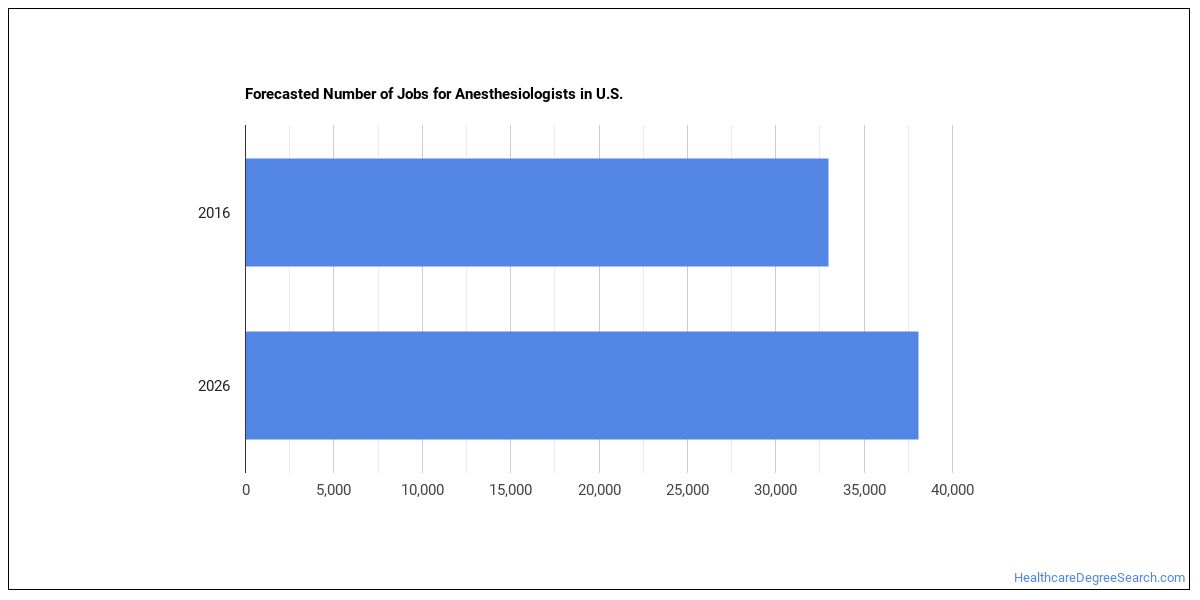
There are roughly 2,641,515 anesthesiologists working in the United States today. This occupation is expected to grow by +10.1% over the projection horizon.
Salary for Anesthesiologists
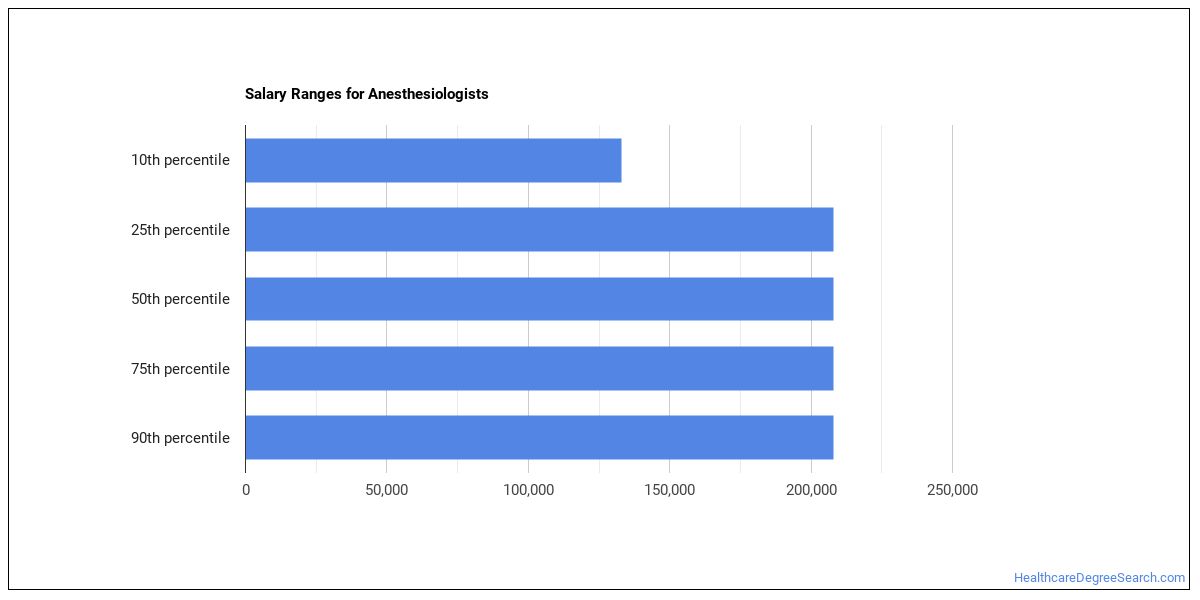
| Statistic | Value |
|---|---|
| Annual median | $78,195 |
| Hourly median | $37.59 |
| 10th percentile | $48,812 |
| 25th percentile | $63,504 |
| 75th percentile | $92,887 |
| 90th percentile | $107,578 |
Wages vary widely based on experience, location, and industry.
How Much Do Anesthesiologists Make in Different U.S. States?
| State | Annual median salary |
|---|---|
| South Carolina | $229,870 |
| New York | $215,740 |
| Georgia | $206,890 |
| Texas | $203,450 |
| West Virginia | $168,390 |
Top-Paying U.S. Regions
Earnings for anesthesiologists shift depending on where you work. These regions lead on median pay:
| Region | Median annual wage | Share of U.S. jobs | Location quotient |
|---|---|---|---|
| Southwest | $200,237 | 12.1% | 0.99 |
| Middle Atlantic | $84,380 | 15.1% | 1.06 |
| Southeast | $50,805 | 22.0% | 1.11 |
Highest-Paying Metro Areas for Anesthesiologists
| Metro area | State | Median annual wage | Employment |
|---|---|---|---|
| Kansas City, MO-KS | MO | $235,950 | 450 |
| Dallas-Fort Worth-Arlington, TX | TX | $208,680 | 1,530 |
| Atlanta-Sandy Springs-Roswell, GA | GA | $206,890 | |
| Houston-Pasadena-The Woodlands, TX | TX | $202,830 | 1,190 |
| Virginia Beach-Chesapeake-Norfolk, VA-NC | VA | $199,430 | |
| Augusta-Richmond County, GA-SC | GA | $196,100 | 40 |
Top Industries Employing Anesthesiologists
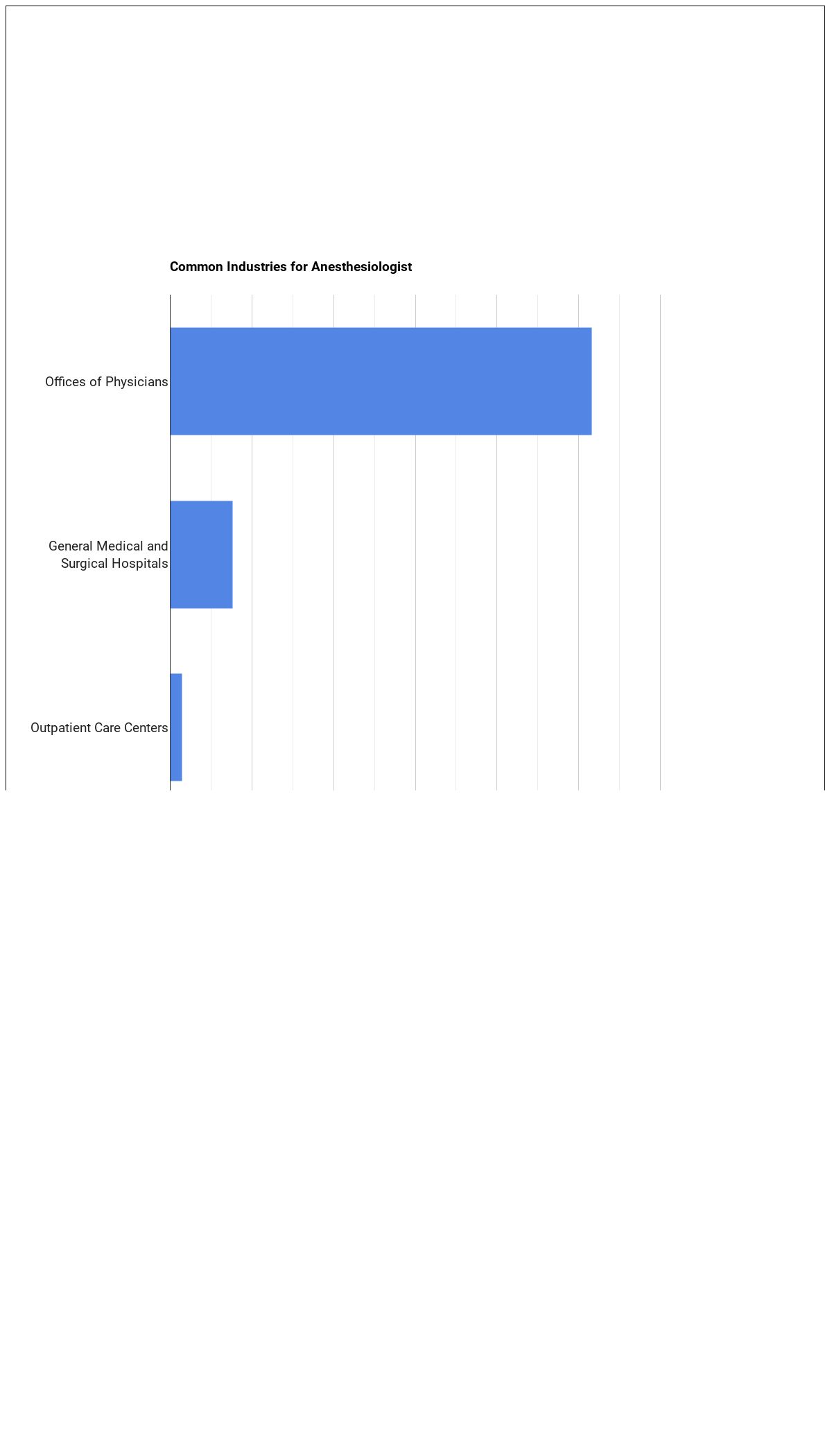
The bulk of anesthesiologists work in these industries:
| Industry | Employment | Median annual wage |
|---|---|---|
| Health Care and Social Assistance | 40,890 | n/a |
| Educational Services | 680 | $217,170 |

Below are examples of industries where anesthesiologists work:
Software Anesthesiologists Use
- Medical software: Epic Systems (hot technology)
- Medical software: MEDITECH software (hot technology)
- Data base user interface and query software: Microsoft Access (hot technology)
- Spreadsheet software: Microsoft Excel (hot technology)
- Electronic mail software: Microsoft Outlook (hot technology)
- Presentation software: Microsoft PowerPoint (hot technology)
- Word processing software: Microsoft Word (hot technology)
What the Workplace Is Like
The work environment for anesthesiologists is shaped by the following characteristics:
- Face-to-Face Discussions with Individuals and Within Teams
- Indoors, Environmentally Controlled
- Importance of Being Exact or Accurate
- Contact With Others
- Physical Proximity
Getting Started in This Career
This career aligns with Extensive Preparation Needed (Job Zone 5), signaling the level of preparation typically expected.
Related Careers
Similar Occupations
- Physician Assistants (Primary-Long)
- Anesthesiologist Assistants (Primary-Short)
- Respiratory Therapists (Supplemental)
- Registered Nurses (Supplemental)
- Acute Care Nurses (Supplemental)
- Nurse Anesthetists (Primary-Short)
- Nurse Practitioners (Primary-Long)
- Cardiologists (Primary-Short)
Where to Study
Students preparing for anesthesiologists commonly pursue programs in:
Health Professions and Related Programs
2 programs across 1 majors
Sources
This profile draws on the following authoritative sources:
- U.S. Bureau of Labor Statistics — Occupational Employment and Wage Statistics (OEWS) for employment and wage data by state and industry.
- BLS Employment Projections for total employment and growth forecasts.
- O*NET (Occupational Information Network) for skills, knowledge, tasks, work activities, work context, technology, and education-zone data.
SOC code: 29-1211.00 (Anesthesiologists).

HealthcareDegreeSearch.com provides higher-education, college and university, degree, program, career, salary, and other helpful information to students, faculty, institutions, and other internet audiences. Presented information and data are subject to change. Inclusion on this website does not imply or represent a direct relationship with the company, school, or brand. Information, though believed correct at time of publication, may not be correct, and no warranty is provided. Contact the schools to verify any information before relying on it. Financial aid may be available for those who qualify. The displayed options may include sponsored or recommended results, not necessarily based on your preferences.
© HealthcareDegreeSearch.com – All Rights Reserved.