Animal Breeders in Ohio
Want to work as an Animal Breeders in Ohio? Below are the key facts. Select and breed animals according to their genealogy, characteristics, and offspring. May require knowledge of artificial insemination techniques and equipment use. May involve keeping records on heats, birth intervals, or pedigree. Excludes “Animal Scientists” (19-1011) whose primary function is research and “Animal Caretakers” (39-2021) who may occasionally breed animals as part of their other caretaking duties.
What do Animal Breeders Make in Ohio?
The animal breeders working in Ohio, the typical annual salary is $71,930 per year (or roughly $34.58/hour).Pay can range from $40,670 at the 10th percentile to $140,920 at the 90th percentile.
| Wage Statistic | Annual | Hourly |
|---|---|---|
| 10th percentile | $40,670 | $19.55 |
| 25th percentile | $56,210 | $27.02 |
| Median (50th) | $71,930 | $34.58 |
| 75th percentile | $111,210 | $53.47 |
| 90th percentile | $140,920 | $67.75 |

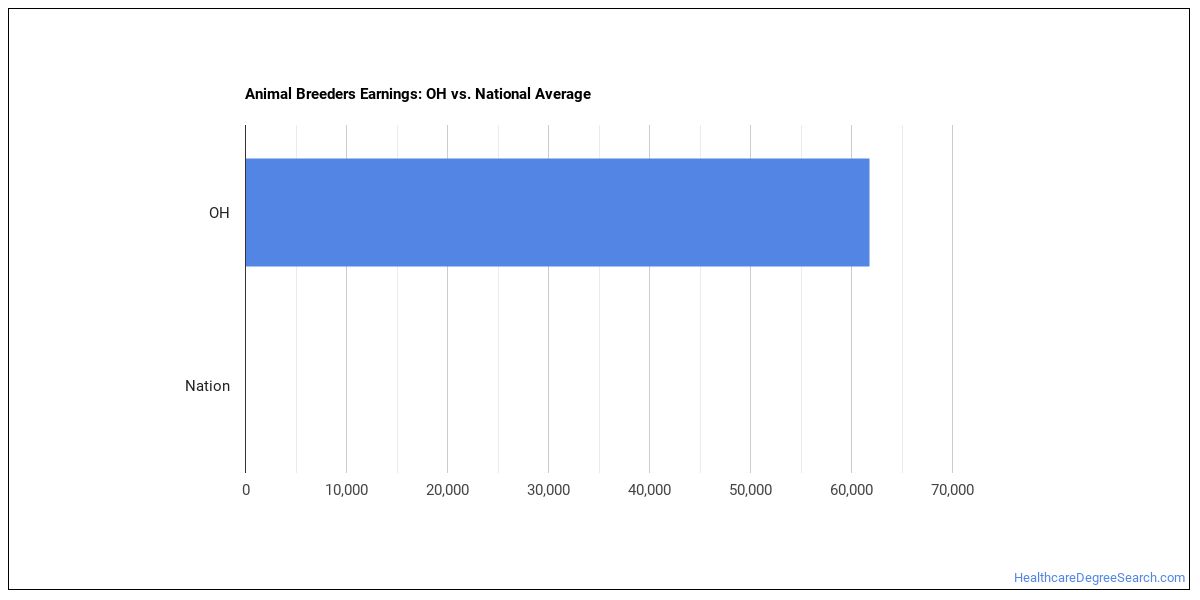
National Wage Comparison
Nationally, animal breeders earn a median of $49,553 per year ($23.82/hour), above the Ohio median.
Employment Outlook
National employment for 117,176 animal breeders across the United States.

Top States for Animal Breeders Employment
The table below shows the states where the most animal breeders work.
| State | Number Employed |
|---|---|
| New York | 220 |
| Texas | 110 |
| Wisconsin | 70 |
| Alabama | 50 |
| Minnesota | 40 |
| Kentucky | 30 |
Highest-Paying States for Animal Breeders
These states pay the most for animal breeders.
| State | Annual Median Salary |
|---|---|
| Ohio | $71,930 |
| California | $58,240 |
| New York | $50,440 |
| Minnesota | $48,670 |
| Idaho | $48,620 |
| Texas | $48,230 |
| Wisconsin | $45,840 |
| Kentucky | $45,730 |
| Alabama | $29,140 |
Skills
The most important animal breeders skills, rated on an importance scale of 0 to 5:
Knowledge Areas
Core knowledge areas for this occupation, rated on an importance scale of 0 to 5:
Abilities
The abilities that matter most for animal breeders, rated on an importance scale of 0 to 5:
Daily Tasks
Day-to-day, animal breeders typically:
- Feed and water animals, and clean and disinfect pens, cages, yards, and hutches.
- Observe animals in heat to detect approach of estrus and exercise animals to induce or hasten estrus, if necessary.
- Treat minor injuries and ailments and contact veterinarians to obtain treatment for animals with serious illnesses or injuries.
- Purchase and stock supplies of feed and medicines.
- Select animals to be bred, and semen specimens to be used, according to knowledge of animals, genealogies, traits, and desired offspring characteristics.
- Examine animals to detect symptoms of illness or injury.
- Build hutches, pens, and fenced yards.
- Record animal characteristics such as weights, growth patterns, and diets.
- Brand, tattoo, or tag animals to allow animal identification.
- Arrange for sale of animals and eggs to hospitals, research centers, pet shops, and food processing plants.
- Place vaccines in drinking water, inject vaccines, or dust air with vaccine powder to protect animals from diseases.
- Bathe and groom animals.
Work Activities
- Identifying Objects, Actions, and Events
- Performing General Physical Activities
- Documenting/Recording Information
- Handling and Moving Objects
- Getting Information
- Making Decisions and Solving Problems
- Monitoring Processes, Materials, or Surroundings
- Establishing and Maintaining Interpersonal Relationships
- Processing Information
- Judging the Qualities of Objects, Services, or People
- Evaluating Information to Determine Compliance with Standards
- Organizing, Planning, and Prioritizing Work
Tools & Technology
Technologies frequently used: Hot technologies: Adobe Acrobat, Adobe Creative Cloud software
Related Careers
Related occupations to animal breeders include:
- Farmers, Ranchers, and Other Agricultural Managers
- Buyers and Purchasing Agents, Farm Products
- Animal Scientists
- Food Scientists and Technologists
- Soil and Plant Scientists
- Agricultural Technicians
Also Known As
Animal Breeder, Animal Husbandman, Animal Husbandry Technician, Animal Technician, Artificial Insemination Technician (AI Technician), Artificial Inseminator, Aviculturist, Bee Breeder, Breeder, Canary Breeder, Cat Breeder, Chicken Fancier, Dairy Husbandman, Dairy Husbandry Worker, Dog Breeder.
References
- U.S. Bureau of Labor Statistics, Occupational Employment and Wage Statistics — https://www.bls.gov/oes/
- O*NET Online — https://www.onetonline.org/
- BLS Employment Projections — https://www.bls.gov/emp/
- O*NET-SOC code: 45-2021.00

HealthcareDegreeSearch.com provides higher-education, college and university, degree, program, career, salary, and other helpful information to students, faculty, institutions, and other internet audiences. Presented information and data are subject to change. Inclusion on this website does not imply or represent a direct relationship with the company, school, or brand. Information, though believed correct at time of publication, may not be correct, and no warranty is provided. Contact the schools to verify any information before relying on it. Financial aid may be available for those who qualify. The displayed options may include sponsored or recommended results, not necessarily based on your preferences.
© HealthcareDegreeSearch.com – All Rights Reserved.