Animal Scientists: Job Description
Conduct research in the genetics, nutrition, reproduction, growth, and development of domestic farm animals.
Featured schools near , edit
What Tasks Do Animal Scientists Do?
Typical responsibilities of animal scientists include:
- Study nutritional requirements of animals and nutritive values of animal feed materials.
- Write up or orally communicate research findings to the scientific community, producers, and the public.
- Develop improved practices in feeding, housing, sanitation, or parasite and disease control of animals.
- Advise producers about improved products and techniques that could enhance their animal production efforts.
- Conduct research concerning animal nutrition, breeding, or management to improve products or processes.
- Study effects of management practices, processing methods, feed, or environmental conditions on quality and quantity of animal products, such as eggs and milk.
- Research and control animal selection and breeding practices to increase production efficiency and improve animal quality.
Skills and Knowledge
Top animal scientists draw on a mix of skills and domain knowledge.
Key Skills
The abilities that matter most in this role, rated on an importance scale of 0 to 5:
Knowledge Areas
Related Job Titles
People in this occupation may also be known by titles such as:
- Animal Anatomist
- Animal Behaviorist
- Animal Biologist
- Animal Geneticist
- Animal Nutrition Consultant
- Animal Nutritionist
- Animal Scientist
- Bacteriologist
Job Outlook
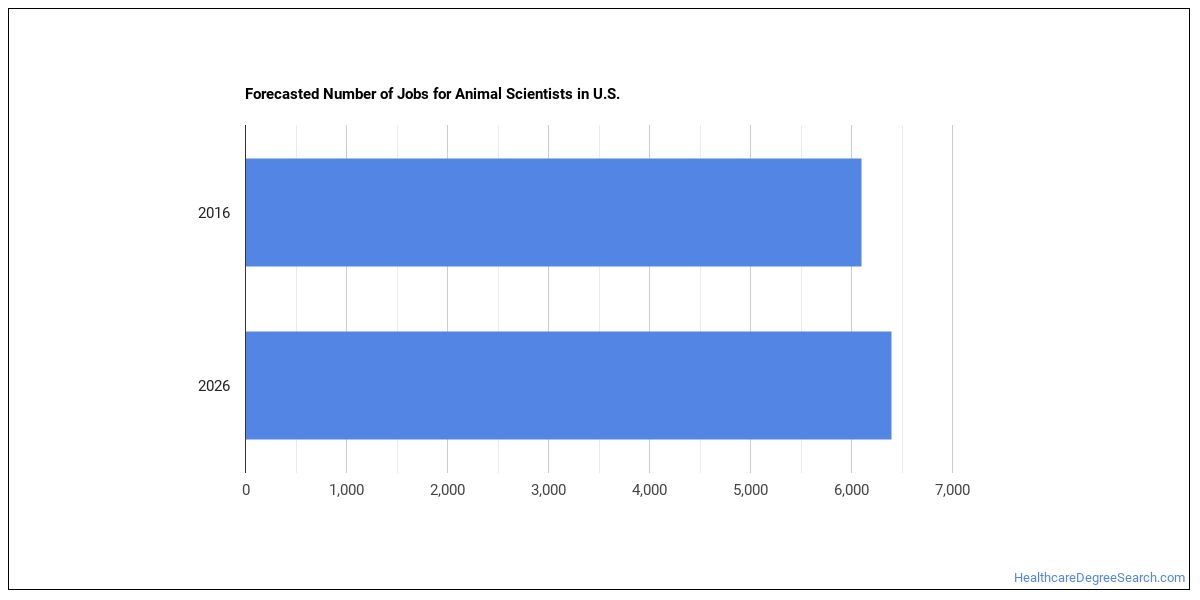
There are roughly 78,475 animal scientists working in the United States today. This occupation is expected to decline by -1.4% over the projection horizon.
How Much Do Animal Scientists Make?
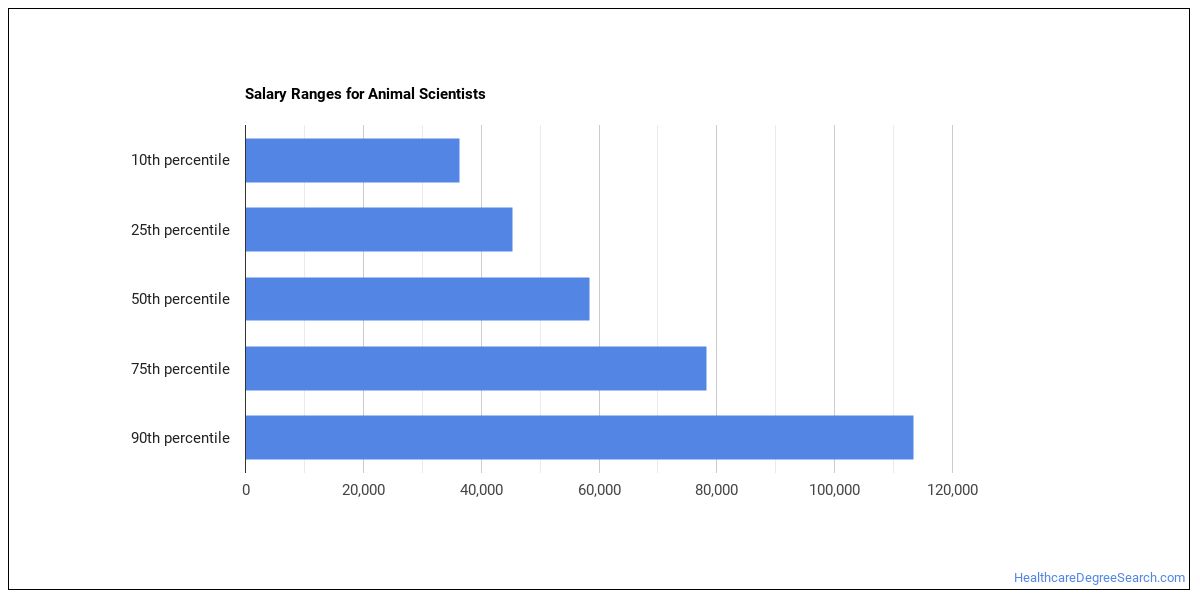
| Statistic | Value |
|---|---|
| Annual median | $93,823 |
| Hourly median | $45.11 |
| 10th percentile | $64,697 |
| 25th percentile | $79,260 |
| 75th percentile | $108,386 |
| 90th percentile | $122,949 |
Pay can vary substantially based on experience, location, and industry.
How Much Do Animal Scientists Make in Different U.S. States?
| State | Annual median salary |
|---|---|
| Minnesota | $138,030 |
| Missouri | $119,110 |
| Georgia | $114,560 |
| Iowa | $95,680 |
| New York | $87,390 |
| Texas | $84,010 |
| Wisconsin | $79,750 |
| Washington | $78,660 |
| Pennsylvania | $77,130 |
| Maryland | $73,560 |
| Ohio | $61,650 |
| Illinois | $60,590 |
| Florida | $57,810 |
| South Dakota | $56,400 |
| Michigan | $51,290 |
| Nebraska | $51,270 |
Where Animal Scientists Earn the Most
Pay for animal scientists vary by region. The following regions pay the most:
| Region | Median annual wage | Share of U.S. jobs | Location quotient |
|---|---|---|---|
| Southeast | $91,860 | 6.7% | 0.55 |
| Southwest | $84,010 | 4.0% | 0.26 |
| Far Western US | $78,660 | 2.7% | 0.68 |
| Plains States | $76,029 | 30.7% | 8.25 |
| Middle Atlantic | $74,667 | 19.3% | 3.45 |
| Great Lakes | $66,650 | 36.7% | 2.93 |
Top Metro Areas
| Metro area | State | Median annual wage | Employment |
|---|---|---|---|
| Fayetteville-Springdale-Rogers, AR | AR | $218,610 | |
| Madison, WI | WI | $81,330 | 190 |
| Washington-Arlington-Alexandria, DC-VA-MD-WV | DC | $78,800 | 150 |
| Philadelphia-Camden-Wilmington, PA-NJ-DE-MD | PA | $76,560 | 80 |
| Lincoln, NE | NE | $62,380 | 60 |
| Baltimore-Columbia-Towson, MD | MD | $60,290 | 50 |
| Chicago-Naperville-Elgin, IL-IN | IL | $59,900 | 40 |
| Omaha, NE-IA | NE | $54,260 |
Industry Breakdown
Most animal scientists are found across these industries:
| Industry | Employment | Median annual wage |
|---|---|---|
| Professional, Scientific, and Technical Services | 810 | $79,250 |
| Educational Services | 640 | $65,190 |
| Agriculture, Forestry, Fishing and Hunting | 290 | $64,940 |
| Manufacturing | 250 | $119,640 |
| Wholesale Trade | 150 | $138,030 |
| Management of Companies and Enterprises | 70 | $124,940 |
| Arts, Entertainment, and Recreation | 60 | $49,350 |
| Other Services (except Public Administration) | 50 | $82,090 |
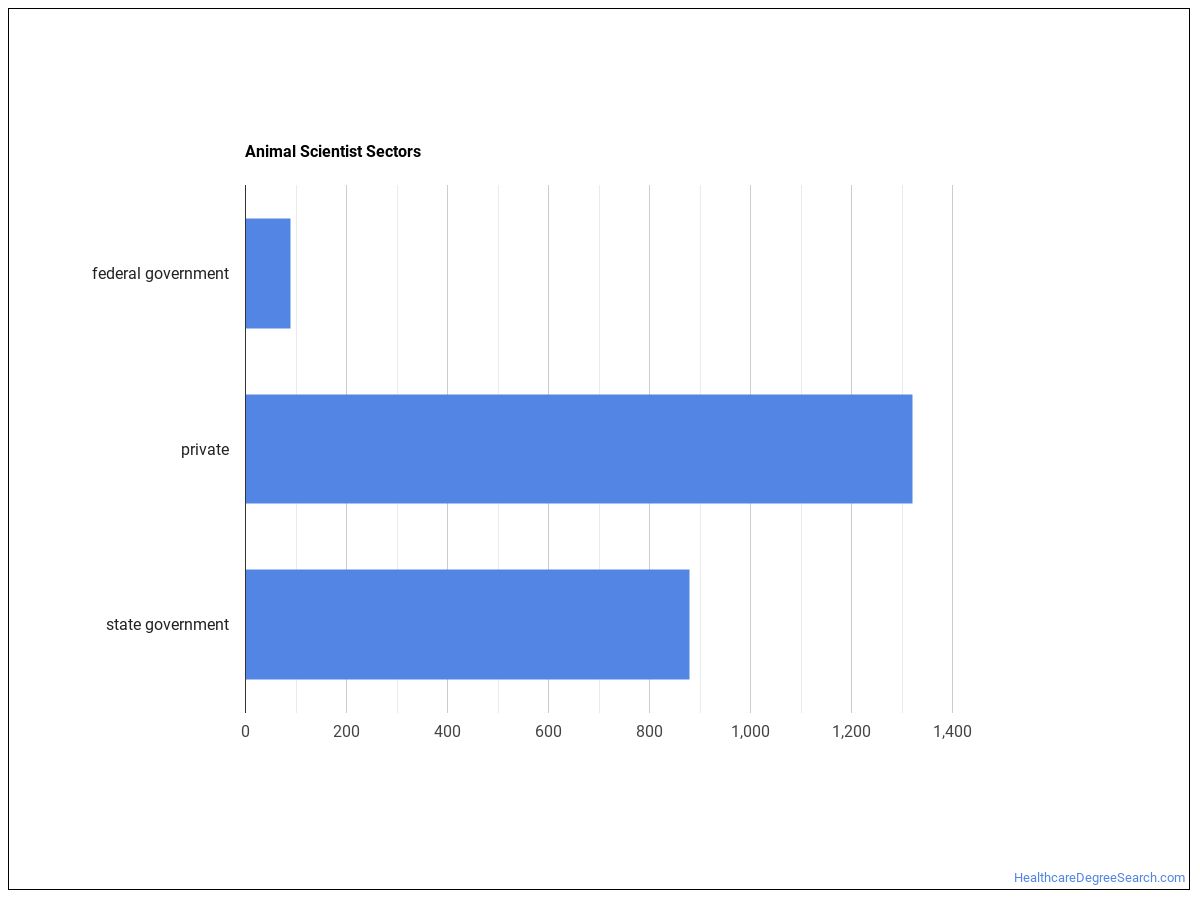
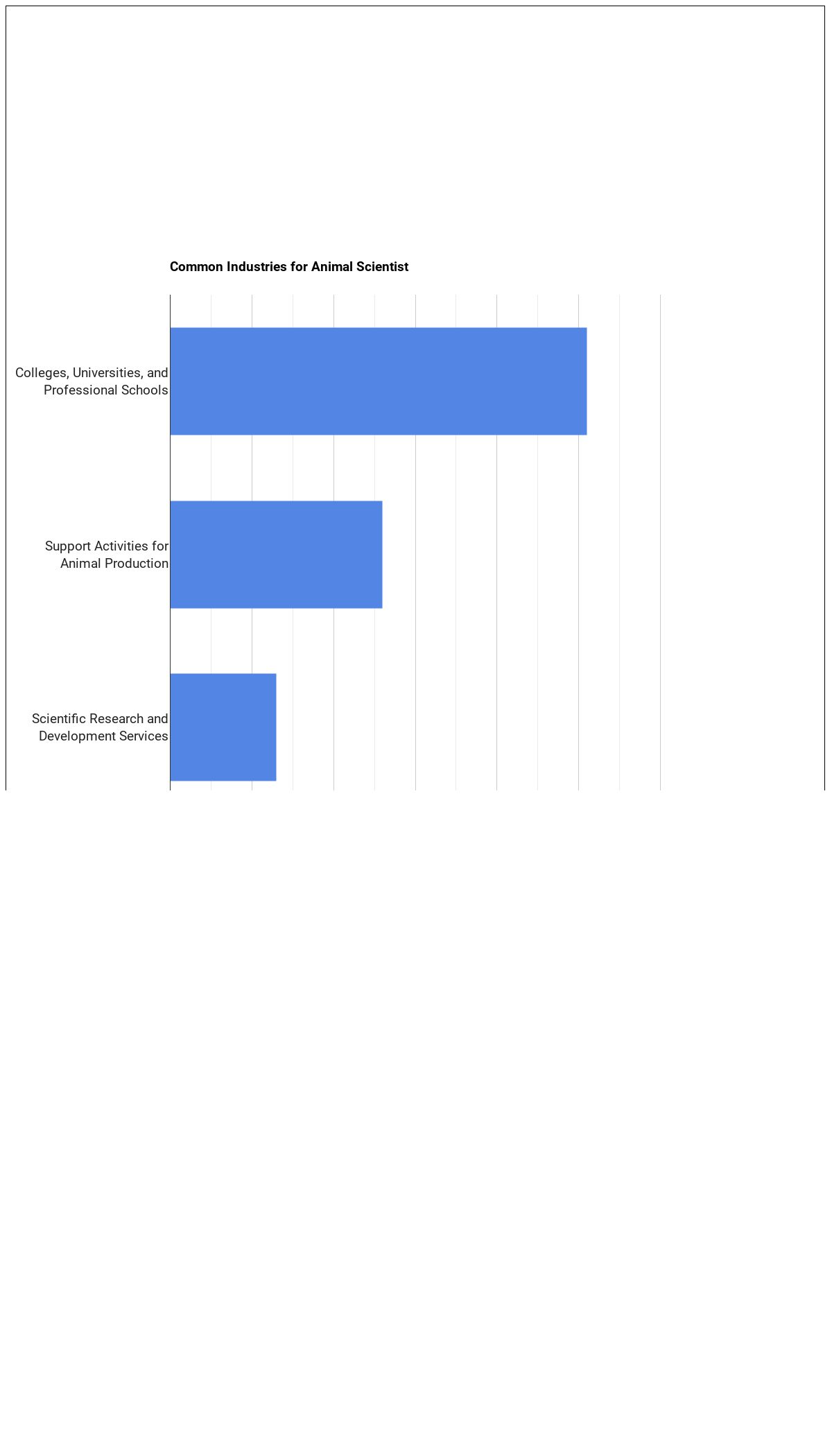
Animal Scientists work in the following industries:
Software Animal Scientists Use
- Computer aided design CAD software: Autodesk AutoCAD (hot technology)
- Geographic information system: ESRI ArcGIS software (hot technology)
- Data base user interface and query software: Microsoft Access (hot technology)
- Spreadsheet software: Microsoft Excel (hot technology)
- Office suite software: Microsoft Office software (hot technology)
- Presentation software: Microsoft PowerPoint (hot technology)
- Word processing software: Microsoft Word (hot technology)
- Enterprise resource planning ERP software: Oracle PeopleSoft (hot technology)
- Analytical or scientific software: SAS (hot technology)
- Data base user interface and query software: Structured query language SQL (hot technology)
- Business intelligence and data analysis software: Tableau (hot technology)
The Day-to-Day Environment
The on-the-job environment of animal scientists is shaped by the following characteristics:
- Telephone Conversations
- Face-to-Face Discussions with Individuals and Within Teams
- Determine Tasks, Priorities and Goals
- Freedom to Make Decisions
Education and Training
This career aligns with Extensive Preparation Needed (Job Zone 5), indicating the level of preparation typically expected.
Related Careers
Similar Occupations
- Farmers, Ranchers, and Other Agricultural Managers (Primary-Short)
- Food Scientists and Technologists (Primary-Short)
- Soil and Plant Scientists (Primary-Short)
- Biochemists and Biophysicists (Primary-Long)
- Microbiologists (Primary-Short)
- Zoologists and Wildlife Biologists (Primary-Long)
- Geneticists (Primary-Long)
- Biologists (Primary-Long)
References
This profile draws on the following authoritative sources:
- U.S. Bureau of Labor Statistics — Occupational Employment and Wage Statistics (OEWS) for employment and wage data by state and industry.
- BLS Employment Projections for total employment and growth forecasts.
- O*NET (Occupational Information Network) for skills, knowledge, tasks, work activities, work context, technology, and education-zone data.
SOC code: 19-1011.00 (Animal Scientists).

HealthcareDegreeSearch.com provides higher-education, college and university, degree, program, career, salary, and other helpful information to students, faculty, institutions, and other internet audiences. Presented information and data are subject to change. Inclusion on this website does not imply or represent a direct relationship with the company, school, or brand. Information, though believed correct at time of publication, may not be correct, and no warranty is provided. Contact the schools to verify any information before relying on it. Financial aid may be available for those who qualify. The displayed options may include sponsored or recommended results, not necessarily based on your preferences.
© HealthcareDegreeSearch.com – All Rights Reserved.