Audiologists in Michigan
Thinking about a career as an Audiologists in Michigan? Here’s what you need to know. Assess and treat persons with hearing and related disorders. May fit hearing aids and provide auditory training. May perform research related to hearing problems.
What do Audiologists Make in Michigan?
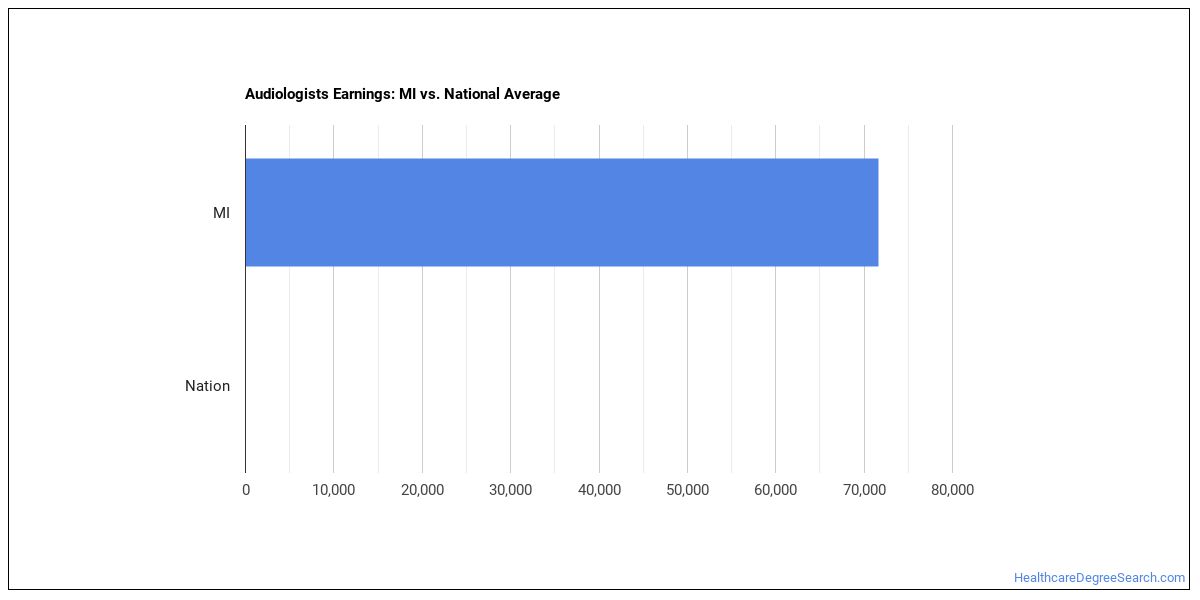
For a audiologists working in Michigan, the typical annual salary is $87,530 per year (or about $42.08/hour).Annual wages span from $67,450 at the 10th percentile to $103,880 at the 90th percentile.
| Wage Statistic | Annual | Hourly |
|---|---|---|
| 10th percentile | $67,450 | $32.43 |
| 25th percentile | $80,360 | $38.64 |
| Median (50th) | $87,530 | $42.08 |
| 75th percentile | $100,170 | $48.16 |
| 90th percentile | $103,880 | $49.94 |

Location quotient — how concentrated this career is in Michigan compared to the national average — is 0.59, indicating fewer audiologists per worker than the national average.
National Wage Comparison
Nationally, audiologists earn a median of $54,746 per year ($26.32/hour), above the Michigan median.
Employment Outlook
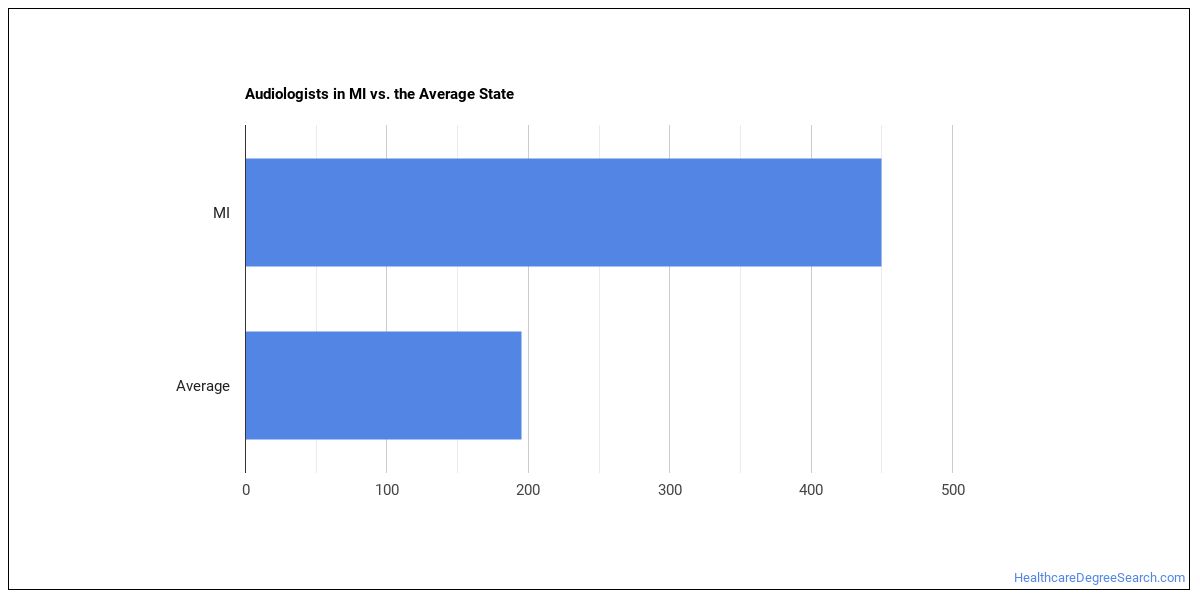
Nationally, total employment in this occupation is 816,778 audiologists across the United States. In Michigan alone, about 250 people work in this role. That’s higher than the typical state, which employs around 240 audiologists.

Top Michigan Metros for Audiologists
These are the Michigan metros with the most audiologists in Michigan.
| Metro Area | Number Employed | Annual Median Salary |
|---|---|---|
| Detroit-Warren-Dearborn, MI | 140 | $87,530 |
| Grand Rapids-Wyoming-Kentwood, MI | 30 | $99,240 |
Top States for Audiologists Employment
These states have the highest employment of audiologists work.
| State | Number Employed |
|---|---|
| California | 1,370 |
| Ohio | 1,310 |
| Georgia | 960 |
| Florida | 820 |
| Pennsylvania | 780 |
| Texas | 710 |
| New York | 670 |
| Illinois | 570 |
| Colorado | 500 |
| Arizona | 450 |
| New Jersey | 390 |
| North Carolina | 390 |
| Wisconsin | 310 |
| Virginia | 310 |
| Iowa | 310 |
| Minnesota | 310 |
| Alabama | 290 |
| Washington | 260 |
| Tennessee | 260 |
| Michigan | 250 |
Highest-Paying States for Audiologists
These states pay the most for audiologists.
| State | Annual Median Salary |
|---|---|
| California | $123,600 |
| District of Columbia | $118,250 |
| Alaska | $109,700 |
| Washington | $105,120 |
| New Jersey | $103,510 |
| Texas | $103,460 |
| South Dakota | $102,310 |
| Arizona | $102,130 |
| Georgia | $101,920 |
| Maryland | $101,700 |
Skills
Key audiologists skills, rated on an importance scale of 0 to 5:
Knowledge Areas
Key knowledge areas for this occupation, rated on an importance scale of 0 to 5:
Abilities
The abilities that matter most for audiologists, rated on an importance scale of 0 to 5:
Daily Tasks
Common tasks include:
- Maintain patient records at all stages, including initial and subsequent evaluation and treatment activities.
- Evaluate hearing and balance disorders to determine diagnoses and courses of treatment.
- Fit, dispense, and repair assistive devices, such as hearing aids.
- Administer hearing tests and examine patients to collect information on type and degree of impairment, using specialized instruments and electronic equipment.
- Monitor patients' progress and provide ongoing observation of hearing or balance status.
- Instruct patients, parents, teachers, or employers in communication strategies to maximize effective receptive communication.
- Counsel and instruct patients and their families in techniques to improve hearing and communication related to hearing loss.
- Refer patients to additional medical or educational services, if needed.
- Participate in conferences or training to update or share knowledge of new hearing or balance disorder treatment methods or technologies.
- Examine and clean patients' ear canals.
- Recommend assistive devices according to patients' needs or nature of impairments.
- Advise educators or other medical staff on hearing or balance topics.
Work Activities
- Assisting and Caring for Others
- Updating and Using Relevant Knowledge
- Working with Computers
- Performing for or Working Directly with the Public
- Establishing and Maintaining Interpersonal Relationships
- Getting Information
- Documenting/Recording Information
- Making Decisions and Solving Problems
- Interpreting the Meaning of Information for Others
- Communicating with People Outside the Organization
- Communicating with Supervisors, Peers, or Subordinates
- Identifying Objects, Actions, and Events
Tools & Technology
Technologies frequently used: Hot technologies: eClinicalWorks EHR software
What Major Will Prepare You For This Career?
Related college programs include:
- Communication Sciences
Featured schools near , edit
Related Careers
Related occupations to audiologists include:
- Chiropractors
- Optometrists
- Occupational Therapists
- Speech-Language Pathologists
- Nurse Practitioners
- Cardiologists
Also Known As
Audiologist, Audiology Doctor (AUD), Audiology Extern, Certificate of Clinical Competence in Audiology Licensed Audiologist (CCC-A Licensed Audiologist), Clinical Audiologist, Dispensing Audiologist, Educational Audiologist, Forensic Audiologist, Hearing Therapist, Industrial Audiologist, Licensed Audiologist, Pediatric Audiologist, Staff Audiologist.
References
- U.S. Bureau of Labor Statistics, Occupational Employment and Wage Statistics — https://www.bls.gov/oes/
- O*NET Online — https://www.onetonline.org/
- BLS Employment Projections — https://www.bls.gov/emp/
- O*NET-SOC code: 29-1181.00

HealthcareDegreeSearch.com provides higher-education, college and university, degree, program, career, salary, and other helpful information to students, faculty, institutions, and other internet audiences. Presented information and data are subject to change. Inclusion on this website does not imply or represent a direct relationship with the company, school, or brand. Information, though believed correct at time of publication, may not be correct, and no warranty is provided. Contact the schools to verify any information before relying on it. Financial aid may be available for those who qualify. The displayed options may include sponsored or recommended results, not necessarily based on your preferences.
© HealthcareDegreeSearch.com – All Rights Reserved.