Home Health Aides: Career Profile
Monitor the health status of an individual with disabilities or illness, and address their health-related needs, such as changing bandages, dressing wounds, or administering medication. Work is performed under the direction of offsite or intermittent onsite licensed nursing staff. Provide assistance with routine healthcare tasks or activities of daily living, such as feeding, bathing, toileting, or ambulation. May also help with tasks such as preparing meals, doing light housekeeping, and doing laundry depending on the patient's abilities.
Featured schools near , edit
The Daily Work of Home Health Aides Do?
The day-to-day responsibilities of home health aides cover:
- Maintain records of patient care, condition, progress, or problems to report and discuss observations with supervisor or case manager.
- Provide patients with help moving in and out of beds, baths, wheelchairs, or automobiles and with dressing and grooming.
- Bathe patients.
- Care for patients by changing bed linens, washing and ironing laundry, cleaning, or assisting with their personal care.
- Entertain, converse with, or read aloud to patients to keep them mentally healthy and alert.
- Plan, purchase, prepare, or serve meals to patients or other family members, according to prescribed diets.
- Check patients' pulse, temperature, and respiration.
- Provide patients and families with emotional support and instruction in areas such as caring for infants, preparing healthy meals, living independently, or adapting to disability or illness.
Key Skills and Knowledge
Successful home health aides draw on a mix of skills and domain knowledge.
Key Skills
The abilities most central to this role, rated on an importance scale of 0 to 5:
Top Knowledge Areas
Related Job Titles
This career also goes by job titles like:
- Care Worker
- Caregiver
- Certified Home Health Aide (CHHA)
- Certified Medical Aide (CMA)
- Certified Nurses Aide (CNA)
- Companion
- Day Support Professional
- Digital Health Caregiver
Employment and Demand
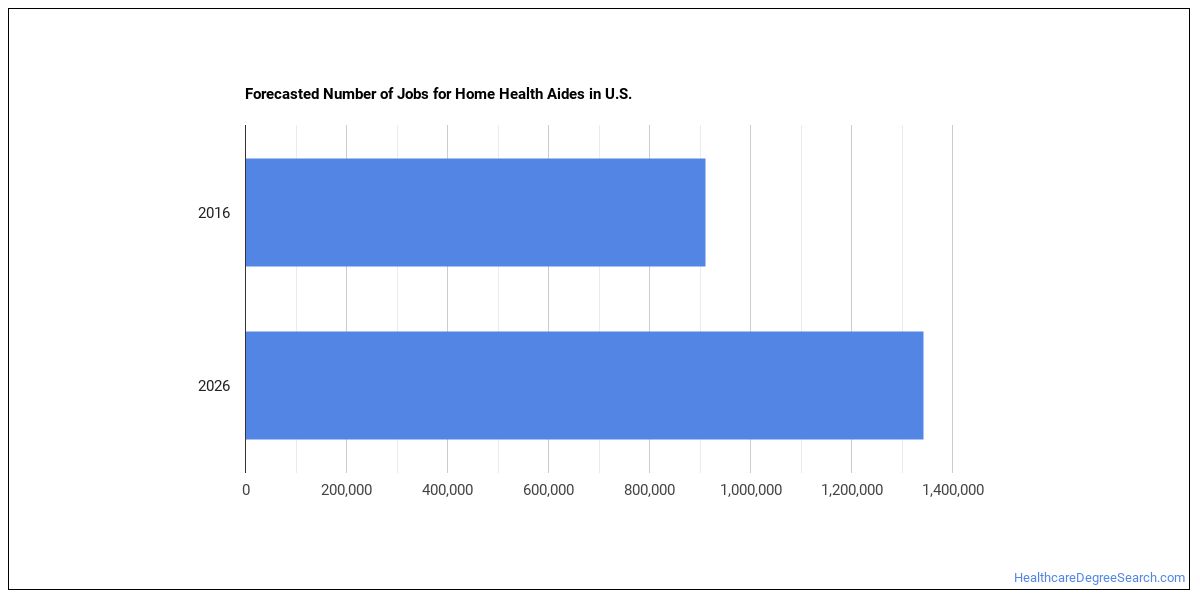
There are roughly 240,778 home health aides working in the United States today. Employment is projected to grow by +3.9% over the projection horizon.
Home Health Aides Pay
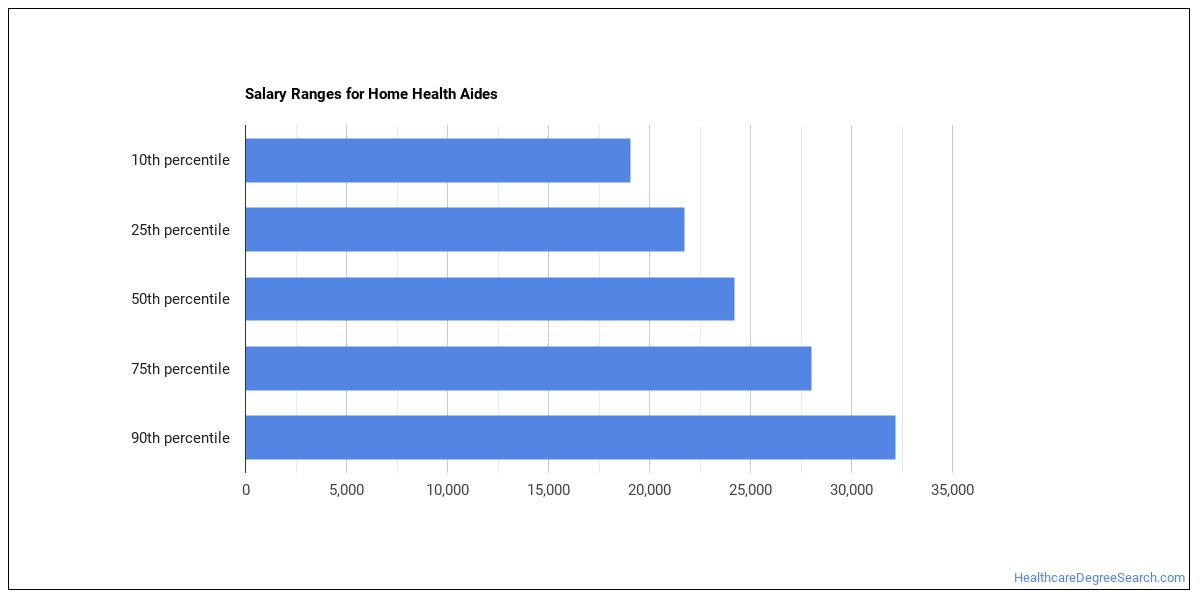
| Statistic | Value |
|---|---|
| Annual median | $48,603 |
| Hourly median | $23.37 |
| 10th percentile | $33,349 |
| 25th percentile | $40,976 |
| 75th percentile | $56,230 |
| 90th percentile | $63,857 |
Compensation varies based on experience, location, and industry.
Software Home Health Aides Use
- Operating system software: Linux (hot technology)
- Data base user interface and query software: Microsoft Access (hot technology)
- Spreadsheet software: Microsoft Excel (hot technology)
- Office suite software: Microsoft Office software (hot technology)
- Electronic mail software: Microsoft Outlook (hot technology)
- Presentation software: Microsoft PowerPoint (hot technology)
- Document management software: Microsoft SharePoint (hot technology)
- Operating system software: Microsoft Windows (hot technology)
- Word processing software: Microsoft Word (hot technology)
- Data base user interface and query software: Oracle Database (hot technology)
- Object or component oriented development software: Python (hot technology)
- Customer relationship management CRM software: Salesforce software (hot technology)
The Day-to-Day Environment
The work environment for home health aides reflects the following characteristics:
- Contact With Others
- Physical Proximity
- Importance of Being Exact or Accurate
- Face-to-Face Discussions with Individuals and Within Teams
- Work With or Contribute to a Work Group or Team
Education and Training
Typical home health aides positions require a high school diploma or equivalent as the typical entry-level education. This occupation sits in Some Preparation Needed (Job Zone 2), reflecting the level of preparation typically expected.
Similar Occupations
Similar Occupations
- Occupational Therapists (Supplemental)
- Recreational Therapists (Supplemental)
- Registered Nurses (Supplemental)
- Acute Care Nurses (Supplemental)
- Clinical Nurse Specialists (Supplemental)
- Nurse Practitioners (Supplemental)
- Emergency Medicine Physicians (Supplemental)
- Family Medicine Physicians (Supplemental)
Where to Study
Students preparing for home health aides commonly pursue programs in:
Health Professions and Related Programs
1 programs across 1 majors
About the Data
This profile draws on the following authoritative sources:
- U.S. Bureau of Labor Statistics — Occupational Employment and Wage Statistics (OEWS) for employment and wage data by state and industry.
- BLS Employment Projections for total employment and growth forecasts.
- O*NET (Occupational Information Network) for skills, knowledge, tasks, work activities, work context, technology, and education-zone data.
SOC code: 31-1121.00 (Home Health Aides).

HealthcareDegreeSearch.com provides higher-education, college and university, degree, program, career, salary, and other helpful information to students, faculty, institutions, and other internet audiences. Presented information and data are subject to change. Inclusion on this website does not imply or represent a direct relationship with the company, school, or brand. Information, though believed correct at time of publication, may not be correct, and no warranty is provided. Contact the schools to verify any information before relying on it. Financial aid may be available for those who qualify. The displayed options may include sponsored or recommended results, not necessarily based on your preferences.
© HealthcareDegreeSearch.com – All Rights Reserved.