Medical Scientists, Except Epidemiologists in Massachusetts
Thinking about a career as a Medical Scientists, Except Epidemiologists in Massachusetts? Here’s what the data says. Conduct research dealing with the understanding of human diseases and the improvement of human health. Engage in clinical investigation, research and development, or other related activities. Includes physicians, dentists, pharmacologists, and medical pathologists who primarily conduct research. Practitioners who primarily provide medical or dental care or dispense drugs are included in “Healthcare Diagnosing or Treating Practitioners” (29-1000).
What do Medical Scientists, Except Epidemiologists Make in Massachusetts?
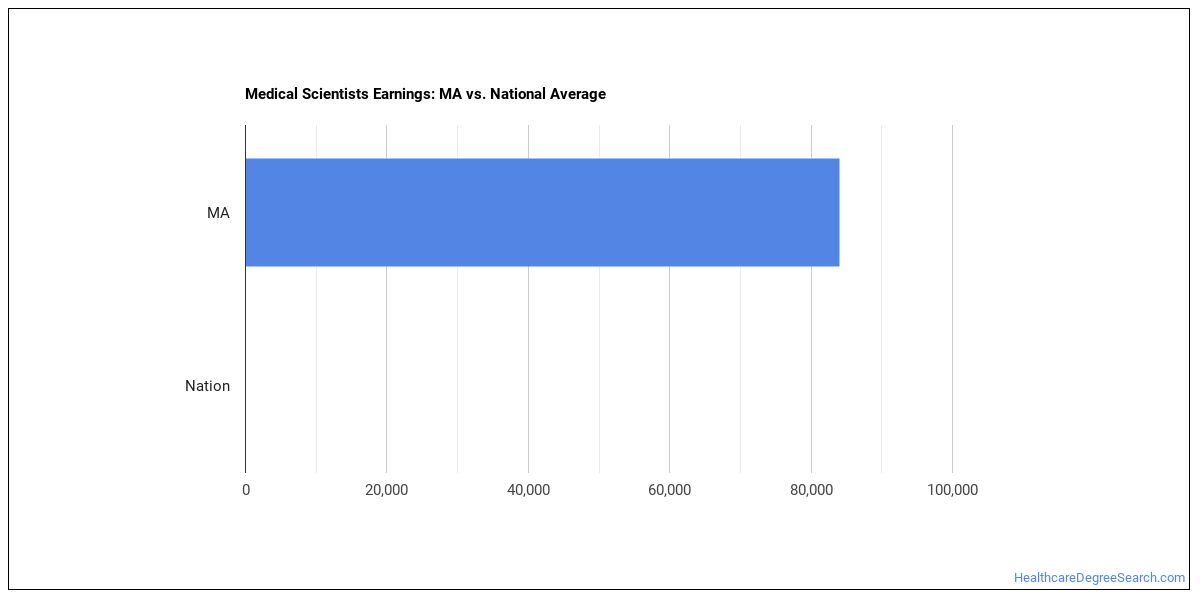
For a medical scientists, except epidemiologists working in Massachusetts, wages run about $129,230 per year (or roughly $62.13/hour).Annual wages span from $80,100 at the 10th percentile to $183,310 at the 90th percentile.
| Wage Statistic | Annual | Hourly |
|---|---|---|
| 10th percentile | $80,100 | $38.51 |
| 25th percentile | $97,720 | $46.98 |
| Median (50th) | $129,230 | $62.13 |
| 75th percentile | $163,720 | $78.71 |
| 90th percentile | $183,310 | $88.13 |

The job concentration index in Massachusetts relative to the national average — is 4.38, indicating that medical scientists, except epidemiologists are more concentrated here than the national average.
National Wage Comparison
Nationally, medical scientists, except epidemiologists earn a median of $111,314 per year ($53.52/hour), higher than the Massachusetts median.
Employment Outlook
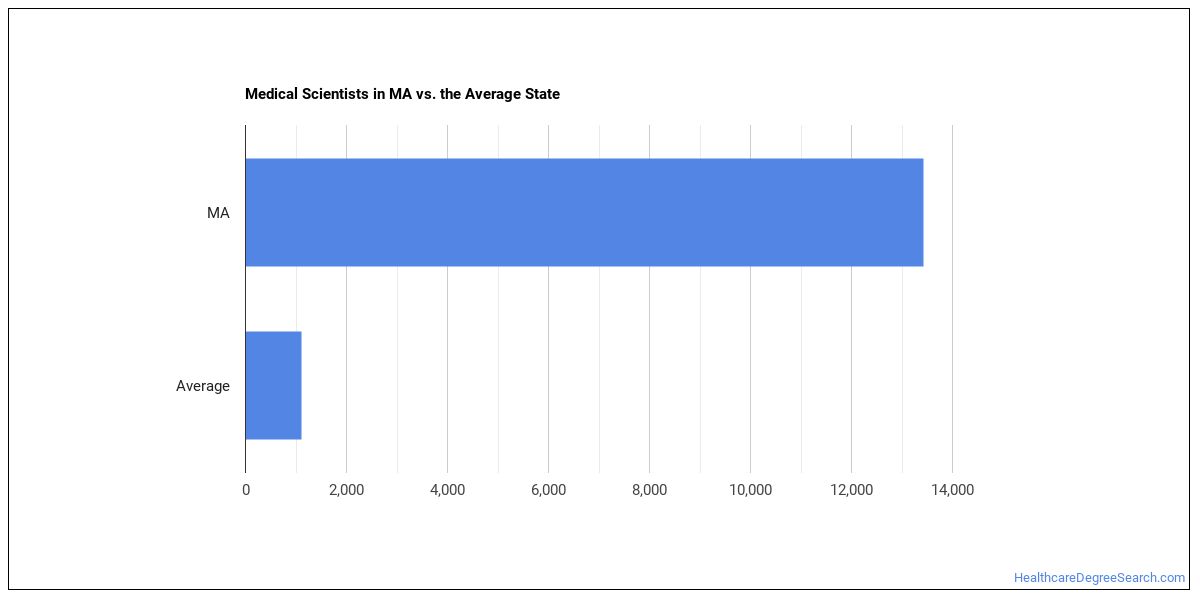
There are roughly 115,486 medical scientists, except epidemiologists in the U.S.. In Massachusetts alone, about 16,170 people work in this role. That’s more than the typical state, which employs around 1,260 medical scientists, except epidemiologists.

Top Massachusetts Metros for Medical Scientists, Except Epidemiologists
The metro areas below employ the most medical scientists, except epidemiologists in Massachusetts.
| Metro Area | Number Employed | Annual Median Salary |
|---|---|---|
| Boston-Cambridge-Newton, MA-NH | 15,330 | $129,230 |
| Worcester, MA | 430 | $108,080 |
| Barnstable Town, MA | 50 | $126,800 |
| Springfield, MA | 50 | $118,870 |
Top States for Medical Scientists, Except Epidemiologists Employment
The table below shows the states where the most medical scientists, except epidemiologists work.
| State | Number Employed |
|---|---|
| California | 24,190 |
| Massachusetts | 16,170 |
| Texas | 11,450 |
| Pennsylvania | 8,540 |
| New York | 8,440 |
| Minnesota | 6,990 |
| Washington | 6,920 |
| New Jersey | 6,510 |
| Maryland | 6,150 |
| Ohio | 5,400 |
| Florida | 4,960 |
| Illinois | 4,810 |
| Virginia | 4,660 |
| Tennessee | 4,500 |
| Michigan | 4,020 |
| North Carolina | 3,680 |
| Colorado | 3,110 |
| Connecticut | 2,220 |
| Wisconsin | 2,050 |
| Indiana | 1,920 |
Highest-Paying States for Medical Scientists, Except Epidemiologists
These states pay the most for medical scientists, except epidemiologists.
| State | Annual Median Salary |
|---|---|
| California | $131,430 |
| Massachusetts | $129,230 |
| Connecticut | $128,140 |
| New Jersey | $127,210 |
| District of Columbia | $110,830 |
| Maine | $107,950 |
| Rhode Island | $104,330 |
| North Carolina | $104,300 |
| Maryland | $103,500 |
| Arizona | $102,250 |
Skills
Top medical scientists, except epidemiologists skills, rated on an importance scale of 0 to 5:
Knowledge Areas
Core knowledge areas for this occupation, rated on an importance scale of 0 to 5:
Abilities
Top abilities for medical scientists, except epidemiologists, rated on an importance scale of 0 to 5:
Daily Tasks
Medical Scientists, Except Epidemiologists typically:
- Follow strict safety procedures when handling toxic materials to avoid contamination.
- Evaluate effects of drugs, gases, pesticides, parasites, and microorganisms at various levels.
- Plan and direct studies to investigate human or animal disease, preventive methods, and treatments for disease.
- Prepare and analyze organ, tissue, and cell samples to identify toxicity, bacteria, or microorganisms or to study cell structure.
- Conduct research to develop methodologies, instrumentation, and procedures for medical application, analyzing data and presenting findings to the scientific audience and general public.
- Teach principles of medicine and medical and laboratory procedures to physicians, residents, students, and technicians.
- Write and publish articles in scientific journals.
- Write applications for research grants.
- Standardize drug dosages, methods of immunization, and procedures for manufacture of drugs and medicinal compounds.
- Study animal and human health and physiological processes.
- Investigate cause, progress, life cycle, or mode of transmission of diseases or parasites.
- Use equipment such as atomic absorption spectrometers, electron microscopes, flow cytometers, or chromatography systems.
Work Activities
- Updating and Using Relevant Knowledge
- Communicating with Supervisors, Peers, or Subordinates
- Thinking Creatively
- Getting Information
- Making Decisions and Solving Problems
- Working with Computers
- Analyzing Data or Information
- Organizing, Planning, and Prioritizing Work
- Identifying Objects, Actions, and Events
- Documenting/Recording Information
- Processing Information
- Estimating the Quantifiable Characteristics of Products, Events, or Information
Tools & Technology
Common tools and software used in this occupation include: Hot technologies: Adobe Photoshop, ESRI ArcGIS software In-demand technologies: Microsoft Excel
What Major Will Prepare You For This Career?
Several college majors map to this occupation:
- Pharmacy/Pharmaceutical Sciences
- Public Health
- Medical Science
Featured schools near , edit
Related Careers
Related occupations to medical scientists, except epidemiologists include:
- Clinical Research Coordinators
- Bioengineers and Biomedical Engineers
- Biochemists and Biophysicists
- Microbiologists
- Bioinformatics Scientists
- Molecular and Cellular Biologists
Also Known As
Anatomist, Cancer Researcher, Chemotherapist, Clinical Analyst, Clinical Laboratory Scientist (Clinical Lab Scientist), Clinical Pharmacologist, Clinical Research Analyst, Clinical Research Scientist, Clinical Research Specialist, Clinical Researcher, Clinical Scientist, Cytologist, Endocrinologist, Gerontologist, Histologist.
References
- U.S. Bureau of Labor Statistics, Occupational Employment and Wage Statistics — https://www.bls.gov/oes/
- O*NET Online — https://www.onetonline.org/
- BLS Employment Projections — https://www.bls.gov/emp/
- O*NET-SOC code: 19-1042.00

HealthcareDegreeSearch.com provides higher-education, college and university, degree, program, career, salary, and other helpful information to students, faculty, institutions, and other internet audiences. Presented information and data are subject to change. Inclusion on this website does not imply or represent a direct relationship with the company, school, or brand. Information, though believed correct at time of publication, may not be correct, and no warranty is provided. Contact the schools to verify any information before relying on it. Financial aid may be available for those who qualify. The displayed options may include sponsored or recommended results, not necessarily based on your preferences.
© HealthcareDegreeSearch.com – All Rights Reserved.