Pharmacists in North Dakota
Thinking about a career as a Pharmacists in North Dakota? Here’s what the data says. Dispense drugs prescribed by physicians and other health practitioners and provide information to patients about medications and their use. May advise physicians and other health practitioners on the selection, dosage, interactions, and side effects of medications.
What do Pharmacists Make in North Dakota?
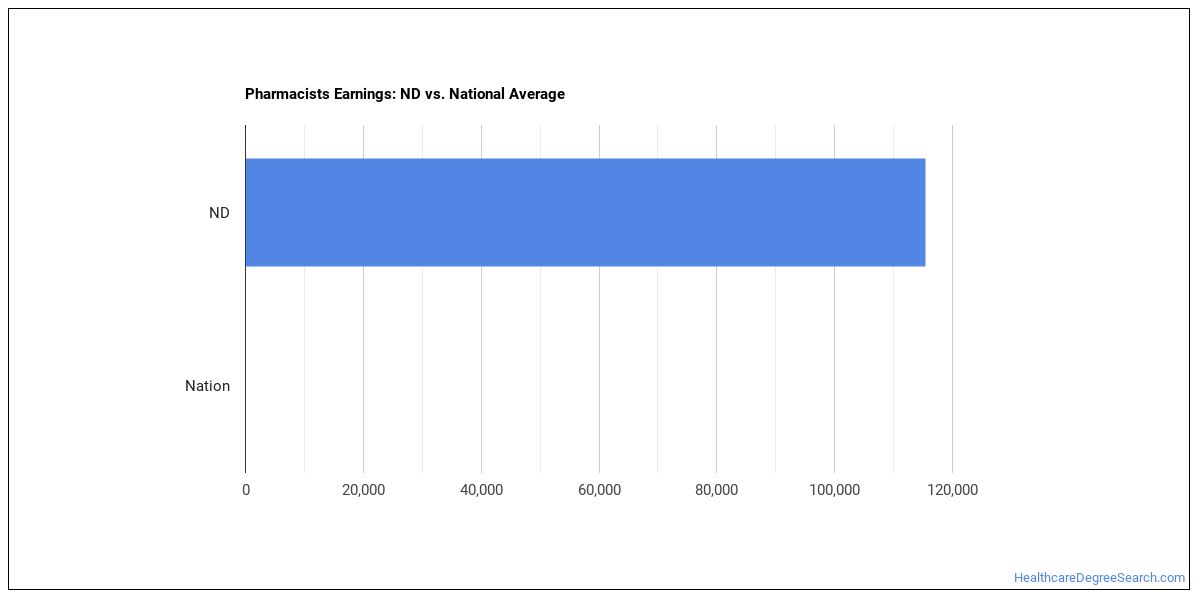
For a pharmacists working in North Dakota, wages run about $135,570 per year (or roughly $65.18/hour).Pay can range from $37,340 at the 10th percentile to $160,750 at the 90th percentile.
| Wage Statistic | Annual | Hourly |
|---|---|---|
| 10th percentile | $37,340 | $17.95 |
| 25th percentile | $125,460 | $60.32 |
| Median (50th) | $135,570 | $65.18 |
| 75th percentile | $145,200 | $69.81 |
| 90th percentile | $160,750 | $77.28 |

The job concentration index in North Dakota relative to the national average — is 1.09.
National Wage Comparison
Nationally, pharmacists earn a median of $93,686 per year ($45.04/hour), higher than the North Dakota median.
Employment Outlook
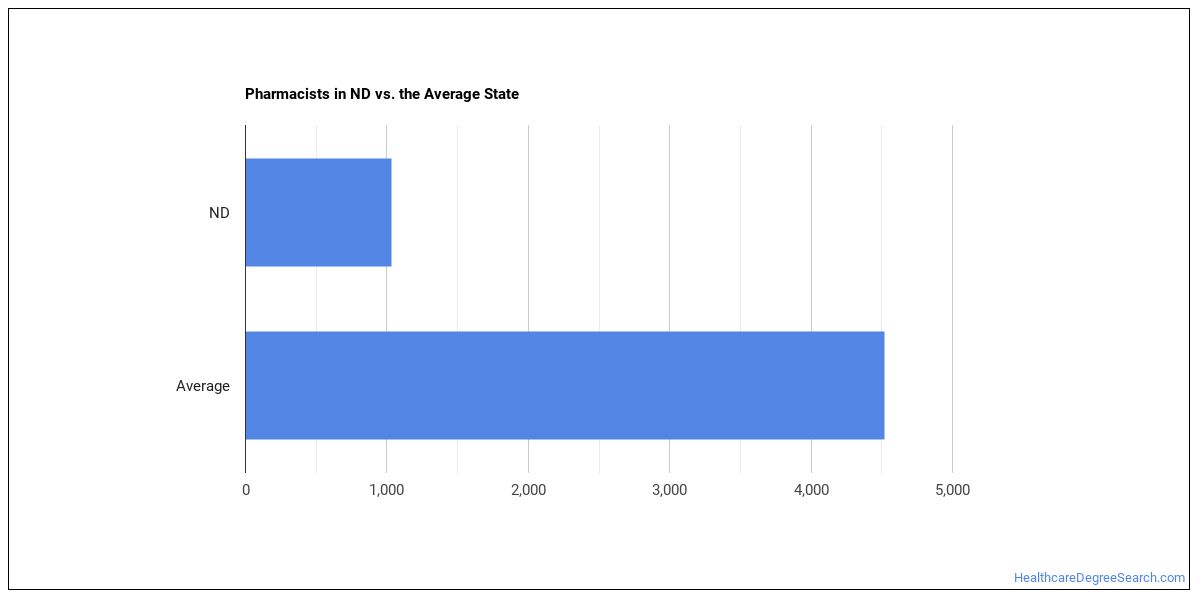
There are roughly 990,178 pharmacists in the U.S.. In North Dakota alone, about 980 people work in this role. That’s fewer than the typical state, which employs around 3,870 pharmacists.

Top North Dakota Metros for Pharmacists
The metro areas below employ the most pharmacists in North Dakota.
| Metro Area | Number Employed | Annual Median Salary |
|---|---|---|
| Fargo, ND-MN | 500 | $136,270 |
| Bismarck, ND | 160 | $137,920 |
| Grand Forks, ND-MN | 90 | $134,020 |
Top States for Pharmacists Employment
These states have the highest employment of pharmacists work.
| State | Number Employed |
|---|---|
| California | 34,490 |
| Texas | 22,720 |
| New York | 21,330 |
| Florida | 20,270 |
| Pennsylvania | 15,120 |
| Ohio | 13,700 |
| Illinois | 12,450 |
| Georgia | 11,480 |
| North Carolina | 11,440 |
| New Jersey | 10,930 |
| Michigan | 9,640 |
| Tennessee | 8,050 |
| Massachusetts | 7,950 |
| Washington | 7,940 |
| Virginia | 7,700 |
| Arizona | 7,690 |
| Missouri | 7,070 |
| Indiana | 6,200 |
| Minnesota | 6,010 |
| South Carolina | 5,920 |
Highest-Paying States for Pharmacists
Where pharmacists earn the most: pharmacists.
| State | Annual Median Salary |
|---|---|
| California | $165,150 |
| Alaska | $163,200 |
| Oregon | $163,120 |
| Washington | $157,020 |
| Minnesota | $154,610 |
| Colorado | $151,680 |
| Hawaii | $150,710 |
| District of Columbia | $141,560 |
| New Hampshire | $141,480 |
| Delaware | $140,470 |
Skills
Key pharmacists skills, rated on an importance scale of 0 to 5:
Knowledge Areas
Key knowledge areas for this occupation, rated on an importance scale of 0 to 5:
Abilities
The abilities that matter most for pharmacists, rated on an importance scale of 0 to 5:
Daily Tasks
Day-to-day, pharmacists typically:
- Review prescriptions to assure accuracy, to ascertain the needed ingredients, and to evaluate their suitability.
- Assess the identity, strength, or purity of medications.
- Provide information and advice regarding drug interactions, side effects, dosage, and proper medication storage.
- Analyze prescribing trends to monitor patient compliance and to prevent excessive usage or harmful interactions.
- Maintain records, such as pharmacy files, patient profiles, charge system files, inventories, control records for radioactive nuclei, or registries of poisons, narcotics, or controlled drugs.
- Collaborate with other health care professionals to plan, monitor, review, or evaluate the quality or effectiveness of drugs or drug regimens, providing advice on drug applications or characteristics.
- Plan, implement, or maintain procedures for mixing, packaging, or labeling pharmaceuticals, according to policy and legal requirements, to ensure quality, security, and proper disposal.
- Order and purchase pharmaceutical supplies, medical supplies, or drugs, maintaining stock and storing and handling it properly.
- Compound and dispense medications as prescribed by doctors and dentists, by calculating, weighing, measuring, and mixing ingredients, or oversee these activities.
- Contact insurance companies to resolve billing issues.
- Advise customers on the selection of medication brands, medical equipment, or healthcare supplies.
- Teach pharmacy students serving as interns in preparation for their graduation or licensure.
Work Activities
- Documenting/Recording Information
- Updating and Using Relevant Knowledge
- Evaluating Information to Determine Compliance with Standards
- Making Decisions and Solving Problems
- Getting Information
- Working with Computers
- Processing Information
- Monitoring Processes, Materials, or Surroundings
- Interpreting the Meaning of Information for Others
- Communicating with Supervisors, Peers, or Subordinates
- Organizing, Planning, and Prioritizing Work
- Identifying Objects, Actions, and Events
Tools & Technology
Software and systems commonly involved: Hot technologies: eClinicalWorks EHR software, Epic Systems
What Major Will Prepare You For This Career?
Programs that train for this career include:
- Pharmacy/Pharmaceutical Sciences
Featured schools near , edit
Related Careers
Other careers like pharmacists include:
- Physician Assistants
- Anesthesiologist Assistants
- Registered Nurses
- Acute Care Nurses
- Clinical Nurse Specialists
- Nurse Anesthetists
Also Known As
Apothecary, Clinical Pharmacist, District Pharmacy Supervisor, Druggist, Float Pharmacist, Hospital Pharmacist, Industrial Pharmacist, Informatics Pharmacist, Outpatient Pharmacist, Pharm D (Pharmacy Doctor), Pharmacist, Pharmacist in Charge (PIC), Pharmacy Consultant, Pharmacy Coordinator, Pharmacy Informaticist.
References
- U.S. Bureau of Labor Statistics, Occupational Employment and Wage Statistics — https://www.bls.gov/oes/
- O*NET Online — https://www.onetonline.org/
- BLS Employment Projections — https://www.bls.gov/emp/
- O*NET-SOC code: 29-1051.00

HealthcareDegreeSearch.com provides higher-education, college and university, degree, program, career, salary, and other helpful information to students, faculty, institutions, and other internet audiences. Presented information and data are subject to change. Inclusion on this website does not imply or represent a direct relationship with the company, school, or brand. Information, though believed correct at time of publication, may not be correct, and no warranty is provided. Contact the schools to verify any information before relying on it. Financial aid may be available for those who qualify. The displayed options may include sponsored or recommended results, not necessarily based on your preferences.
© HealthcareDegreeSearch.com – All Rights Reserved.