Speech-Language Pathologists in Oregon
Thinking about a career as a Speech-Language Pathologists in Oregon? Here’s what the data says. Assess and treat persons with speech, language, voice, and fluency disorders. May select alternative communication systems and teach their use. May perform research related to speech and language problems.
What do Speech-Language Pathologists Make in Oregon?
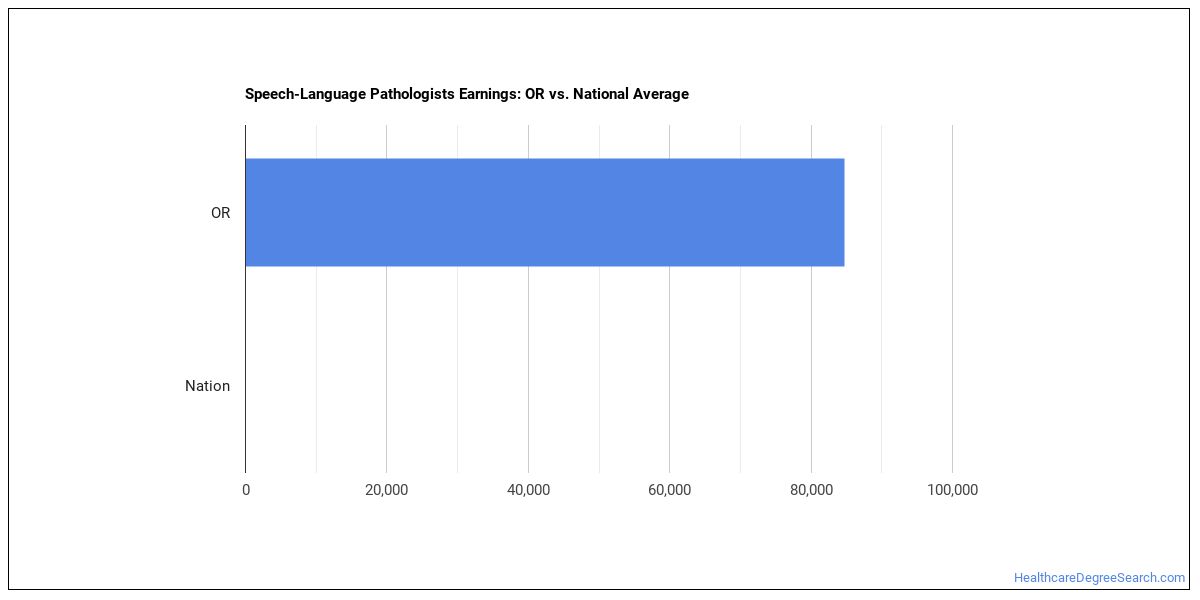
The speech-language pathologists working in Oregon, the median annual wage is $104,230 per year (or about $50.11/hour).Earnings range from $67,100 at the 10th percentile to $136,780 at the 90th percentile.
| Wage Statistic | Annual | Hourly |
|---|---|---|
| 10th percentile | $67,100 | $32.26 |
| 25th percentile | $89,750 | $43.15 |
| Median (50th) | $104,230 | $50.11 |
| 75th percentile | $128,900 | $61.97 |
| 90th percentile | $136,780 | $65.76 |

Location quotient — how concentrated this career is in Oregon compared to the national average — is 0.77, suggesting fewer speech-language pathologists per worker than the national average.
National Wage Comparison
Nationally, speech-language pathologists earn a median of $47,305 per year ($22.74/hour), above the Oregon median.
Employment Outlook
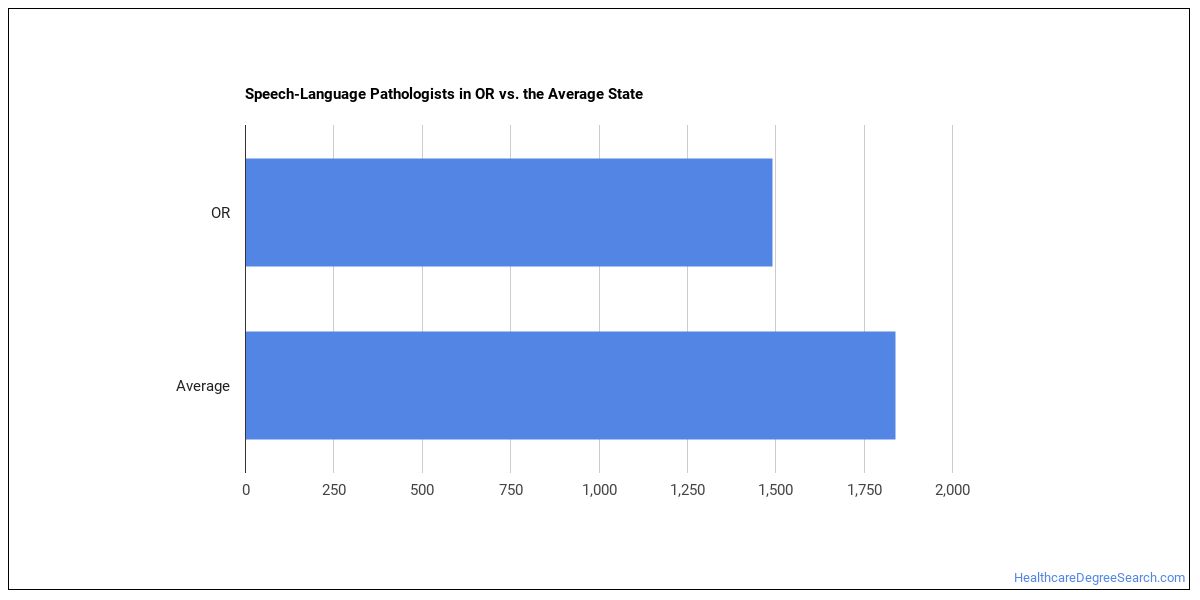
Nationally, total employment in this occupation is 412,698 speech-language pathologists across the United States. In Oregon alone, around 1,750 people work in this role. That’s fewer than the typical state, which employs around 2,160 speech-language pathologists.

Top Oregon Metros for Speech-Language Pathologists
The metro areas below employ the most speech-language pathologists in Oregon.
| Metro Area | Number Employed | Annual Median Salary |
|---|---|---|
| Portland-Vancouver-Hillsboro, OR-WA | 1,280 | $106,920 |
| Eugene-Springfield, OR | 160 | $93,700 |
| Salem, OR | 140 | $98,680 |
| Bend, OR | 90 | $106,110 |
| Medford, OR | 70 | $92,500 |
| Albany, OR | 50 | $100,720 |
Top States for Speech-Language Pathologists Employment
View the states that employ the most speech-language pathologists work.
| State | Number Employed |
|---|---|
| Texas | 18,600 |
| New York | 16,250 |
| California | 14,680 |
| Illinois | 9,100 |
| Florida | 8,990 |
| Ohio | 7,660 |
| New Jersey | 7,660 |
| Pennsylvania | 6,860 |
| North Carolina | 5,160 |
| Massachusetts | 5,000 |
| Michigan | 4,410 |
| Colorado | 4,260 |
| Georgia | 4,190 |
| Virginia | 3,850 |
| Minnesota | 3,730 |
| Maryland | 3,720 |
| Tennessee | 3,510 |
| Wisconsin | 3,210 |
| Washington | 3,170 |
| Louisiana | 3,110 |
Highest-Paying States for Speech-Language Pathologists
The highest-paying states for speech-language pathologists.
| State | Annual Median Salary |
|---|---|
| California | $116,000 |
| New York | $108,870 |
| Hawaii | $108,230 |
| Colorado | $108,070 |
| District of Columbia | $106,950 |
| New Mexico | $104,910 |
| Oregon | $104,230 |
| Washington | $102,450 |
| Massachusetts | $101,790 |
| New Jersey | $101,600 |
Skills
The most important speech-language pathologists skills, rated on an importance scale of 0 to 5:
Knowledge Areas
Key knowledge areas for this occupation, rated on an importance scale of 0 to 5:
Abilities
The abilities that matter most for speech-language pathologists, rated on an importance scale of 0 to 5:
Daily Tasks
Speech-Language Pathologists typically:
- Evaluate hearing or speech and language test results, barium swallow results, or medical or background information to diagnose and plan treatment for speech, language, fluency, voice, or swallowing disorders.
- Write reports and maintain proper documentation of information, such as client Medicaid or billing records or caseload activities, including the initial evaluation, treatment, progress, and discharge of clients.
- Monitor patients' progress and adjust treatments accordingly.
- Develop or implement treatment plans for problems such as stuttering, delayed language, swallowing disorders, or inappropriate pitch or harsh voice problems, based on own assessments and recommendations of physicians, psychologists, or social workers.
- Administer hearing or speech and language evaluations, tests, or examinations to patients to collect information on type and degree of impairments, using written or oral tests or special instruments.
- Educate patients and family members about various topics, such as communication techniques or strategies to cope with or to avoid personal misunderstandings.
- Supervise or collaborate with therapy team.
- Participate in and write reports for meetings regarding patients' progress, such as individualized educational planning (IEP) meetings, in-service meetings, or intervention assistance team meetings.
- Teach clients to control or strengthen tongue, jaw, face muscles, or breathing mechanisms.
- Instruct clients in techniques for more effective communication, such as sign language, lip reading, or voice improvement.
- Consult with and advise educators or medical staff on speech or hearing topics, such as communication strategies or speech and language stimulation.
- Develop speech exercise programs to reduce disabilities.
Work Activities
- Documenting/Recording Information
- Getting Information
- Establishing and Maintaining Interpersonal Relationships
- Organizing, Planning, and Prioritizing Work
- Making Decisions and Solving Problems
- Developing Objectives and Strategies
- Analyzing Data or Information
- Working with Computers
- Performing Administrative Activities
- Evaluating Information to Determine Compliance with Standards
- Communicating with Supervisors, Peers, or Subordinates
- Updating and Using Relevant Knowledge
Tools & Technology
Software and systems commonly involved: Hot technologies: eClinicalWorks EHR software
What Major Will Prepare You For This Career?
Several college majors map to this occupation:
- Communication Sciences
Featured schools near , edit
Related Careers
Careers similar to speech-language pathologists include:
- Clinical and Counseling Psychologists
- Clinical Neuropsychologists
- Marriage and Family Therapists
- Mental Health Counselors
- Mental Health and Substance Abuse Social Workers
- Occupational Therapists
Also Known As
Bilingual Speech-Language Pathologist (Bilingual SLP), Home Health SLP (Home Health Speech Language Pathologist), Language Pathologist, Oral Therapist, Pediatric SLP (Pediatric Speech Language Pathologist), Pediatric Speech-Language Pathologist (Pediatric SLP), Public School Speech Clinician, Public School Speech Therapist, SLP CF (Speech Language Pathologist Clinical Fellow), SNF RN (Skilled Nursing Facility Registered Nurse), School SLP (School Speech Language Pathologist), Speech Clinician, Speech Correction Consultant, Speech Language Pathologist, Speech Pathologist.
References
- U.S. Bureau of Labor Statistics, Occupational Employment and Wage Statistics — https://www.bls.gov/oes/
- O*NET Online — https://www.onetonline.org/
- BLS Employment Projections — https://www.bls.gov/emp/
- O*NET-SOC code: 29-1127.00

HealthcareDegreeSearch.com provides higher-education, college and university, degree, program, career, salary, and other helpful information to students, faculty, institutions, and other internet audiences. Presented information and data are subject to change. Inclusion on this website does not imply or represent a direct relationship with the company, school, or brand. Information, though believed correct at time of publication, may not be correct, and no warranty is provided. Contact the schools to verify any information before relying on it. Financial aid may be available for those who qualify. The displayed options may include sponsored or recommended results, not necessarily based on your preferences.
© HealthcareDegreeSearch.com – All Rights Reserved.