Veterinarians in Georgia
Want to work as a Veterinarians in Georgia? Below are the key facts. Diagnose, treat, or research diseases and injuries of animals. Includes veterinarians who conduct research and development, inspect livestock, or care for pets and companion animals.
What do Veterinarians Make in Georgia?
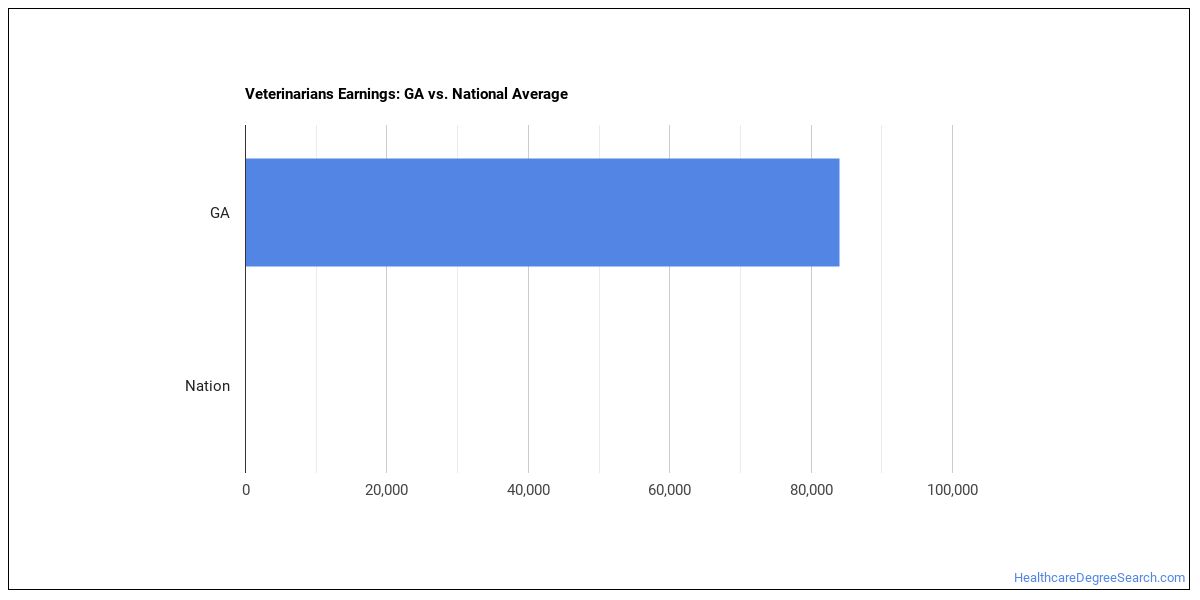
For veterinarians working in Georgia, the median annual wage is $115,220 per year (or roughly $55.39/hour).Pay can range from $70,280 at the 10th percentile to $203,370 at the 90th percentile.
| Wage Statistic | Annual | Hourly |
|---|---|---|
| 10th percentile | $70,280 | $33.79 |
| 25th percentile | $98,270 | $47.25 |
| Median (50th) | $115,220 | $55.39 |
| 75th percentile | $140,810 | $67.70 |
| 90th percentile | $203,370 | $97.77 |

The location quotient — a measure of how concentrated this occupation is in Georgia relative to the national average — is 0.96.
National Wage Comparison
Nationally, veterinarians earn a median of $53,196 per year ($25.58/hour), above the Georgia median.
Employment Outlook
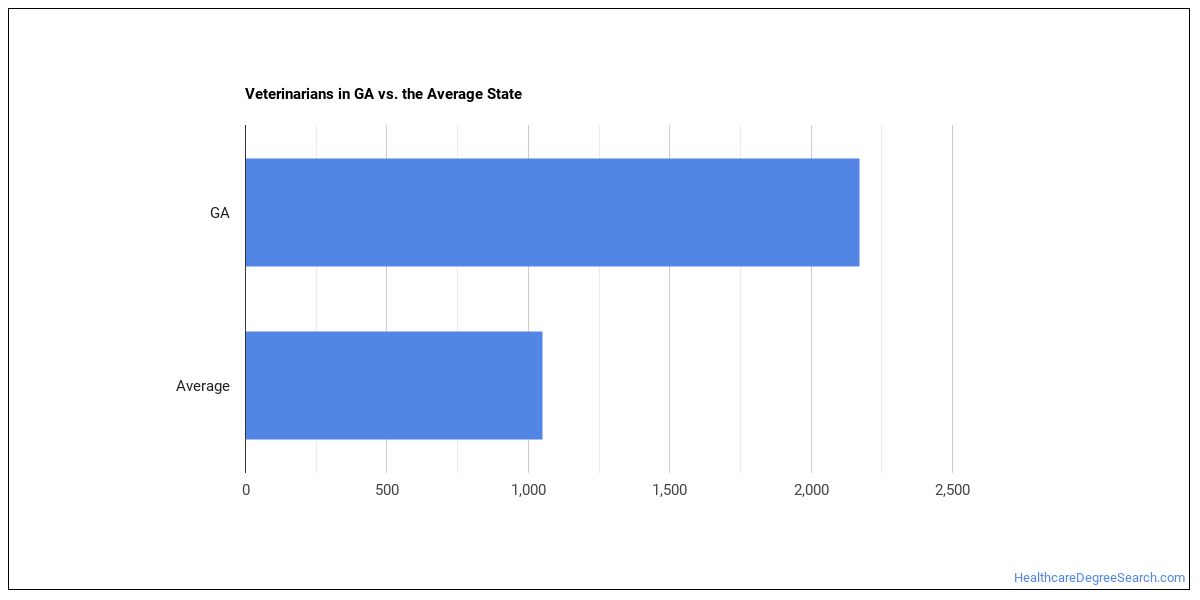
Nationally, total employment in this occupation is 2,809,076 veterinarians in the U.S.. In Georgia alone, around 2,430 people work in this role. That’s more than the typical state, which employs around 1,180 veterinarians.

Top Georgia Metros for Veterinarians
The largest metro-area employers of veterinarians in Georgia.
| Metro Area | Number Employed | Annual Median Salary |
|---|---|---|
| Atlanta-Sandy Springs-Roswell, GA | 1,440 | $127,150 |
| Augusta-Richmond County, GA-SC | 130 | $101,130 |
| Athens-Clarke County, GA | 130 | $103,240 |
| Savannah, GA | 110 | $105,310 |
| Columbus, GA-AL | 60 | $96,560 |
| Gainesville, GA | 50 | $119,450 |
| Warner Robins, GA | 50 | $116,200 |
Top States for Veterinarians Employment
These states have the highest employment of veterinarians work.
| State | Number Employed |
|---|---|
| California | 8,510 |
| Texas | 5,940 |
| Florida | 5,480 |
| Pennsylvania | 3,220 |
| New York | 3,200 |
| Illinois | 2,950 |
| North Carolina | 2,950 |
| Ohio | 2,880 |
| Virginia | 2,560 |
| Georgia | 2,430 |
| Colorado | 2,380 |
| Michigan | 2,320 |
| Minnesota | 2,060 |
| Missouri | 2,020 |
| Washington | 1,940 |
| Massachusetts | 1,820 |
| Wisconsin | 1,760 |
| New Jersey | 1,750 |
| Oregon | 1,640 |
| Tennessee | 1,590 |
Highest-Paying States for Veterinarians
The highest-paying states for veterinarians.
| State | Annual Median Salary |
|---|---|
| California | $158,950 |
| Washington | $155,060 |
| District of Columbia | $153,200 |
| New Jersey | $148,550 |
| West Virginia | $134,290 |
| Vermont | $134,240 |
| Arizona | $132,810 |
| Massachusetts | $131,500 |
| New York | $131,330 |
| Florida | $131,170 |
Skills
Key veterinarians skills, rated on an importance scale of 0 to 5:
Knowledge Areas
Core knowledge areas for this occupation, rated on an importance scale of 0 to 5:
Abilities
Top abilities for veterinarians, rated on an importance scale of 0 to 5:
Daily Tasks
Day-to-day, veterinarians typically:
- Treat sick or injured animals by prescribing medication, setting bones, dressing wounds, or performing surgery.
- Inoculate animals against various diseases, such as rabies or distemper.
- Examine animals to detect and determine the nature of diseases or injuries.
- Collect body tissue, feces, blood, urine, or other body fluids for examination and analysis.
- Operate diagnostic equipment, such as radiographic or ultrasound equipment, and interpret the resulting images.
- Educate the public about diseases that can be spread from animals to humans.
- Counsel clients about the deaths of their pets or about euthanasia decisions for their pets.
- Advise animal owners regarding sanitary measures, feeding, general care, medical conditions, or treatment options.
- Euthanize animals.
- Attend lectures, conferences, or continuing education courses.
- Train or supervise workers who handle or care for animals.
- Perform administrative or business management tasks, such as scheduling appointments, accepting payments from clients, budgeting, or maintaining business records.
Work Activities
- Making Decisions and Solving Problems
- Getting Information
- Updating and Using Relevant Knowledge
- Identifying Objects, Actions, and Events
- Documenting/Recording Information
- Performing for or Working Directly with the Public
- Establishing and Maintaining Interpersonal Relationships
- Interpreting the Meaning of Information for Others
- Monitoring Processes, Materials, or Surroundings
- Communicating with Supervisors, Peers, or Subordinates
- Processing Information
- Analyzing Data or Information
Tools & Technology
Technologies frequently used: Hot technologies: Adobe Acrobat
Related Careers
Other careers like veterinarians include:
- Oral and Maxillofacial Surgeons
- Nurse Practitioners
- Anesthesiologists
- Dermatologists
- Emergency Medicine Physicians
- General Internal Medicine Physicians
Also Known As
Animal Anatomist, Animal Chiropractor, Animal Doctor, Animal Pathologist, Animal Physiologist, Animal Surgeon, Companion Animal Practitioner, Doctor of Veterinary Medicine (DVM), Emergency Veterinarian (Emergency Vet), Equine Dentist, Equine Vet (Equine Veterinarian), Horse Doctor, Laboratory Animal Care Veterinarian (Lab Animal Care Vet), Laboratory Veterinarian (Lab Vet), Large Animal Veterinarian (Large Animal Vet).
References
- U.S. Bureau of Labor Statistics, Occupational Employment and Wage Statistics — https://www.bls.gov/oes/
- O*NET Online — https://www.onetonline.org/
- BLS Employment Projections — https://www.bls.gov/emp/
- O*NET-SOC code: 29-1131.00

HealthcareDegreeSearch.com provides higher-education, college and university, degree, program, career, salary, and other helpful information to students, faculty, institutions, and other internet audiences. Presented information and data are subject to change. Inclusion on this website does not imply or represent a direct relationship with the company, school, or brand. Information, though believed correct at time of publication, may not be correct, and no warranty is provided. Contact the schools to verify any information before relying on it. Financial aid may be available for those who qualify. The displayed options may include sponsored or recommended results, not necessarily based on your preferences.
© HealthcareDegreeSearch.com – All Rights Reserved.