Medical Scientists, Except Epidemiologists: Job Description
Conduct research dealing with the understanding of human diseases and the improvement of human health. Engage in clinical investigation, research and development, or other related activities.
Featured schools near , edit
What Do Medical Scientists, Except Epidemiologists Take On?
The day-to-day responsibilities of medical scientists, except epidemiologists include:
- Follow strict safety procedures when handling toxic materials to avoid contamination.
- Evaluate effects of drugs, gases, pesticides, parasites, and microorganisms at various levels.
- Plan and direct studies to investigate human or animal disease, preventive methods, and treatments for disease.
- Prepare and analyze organ, tissue, and cell samples to identify toxicity, bacteria, or microorganisms or to study cell structure.
- Conduct research to develop methodologies, instrumentation, and procedures for medical application, analyzing data and presenting findings to the scientific audience and general public.
- Teach principles of medicine and medical and laboratory procedures to physicians, residents, students, and technicians.
- Write and publish articles in scientific journals.
- Write applications for research grants.
Key Skills and Knowledge
Top medical scientists, except epidemiologists combine a mix of skills and domain knowledge.
Top Skills
The abilities most central to this role, rated on an importance scale of 0 to 5:
Knowledge Areas
Other Medical Scientists, Except Epidemiologists Job Titles
Common job titles for this role include:
- Anatomist
- Cancer Researcher
- Chemotherapist
- Clinical Analyst
- Clinical Laboratory Scientist (Clinical Lab Scientist)
- Clinical Pharmacologist
- Clinical Research Analyst
- Clinical Research Scientist
Employment and Demand
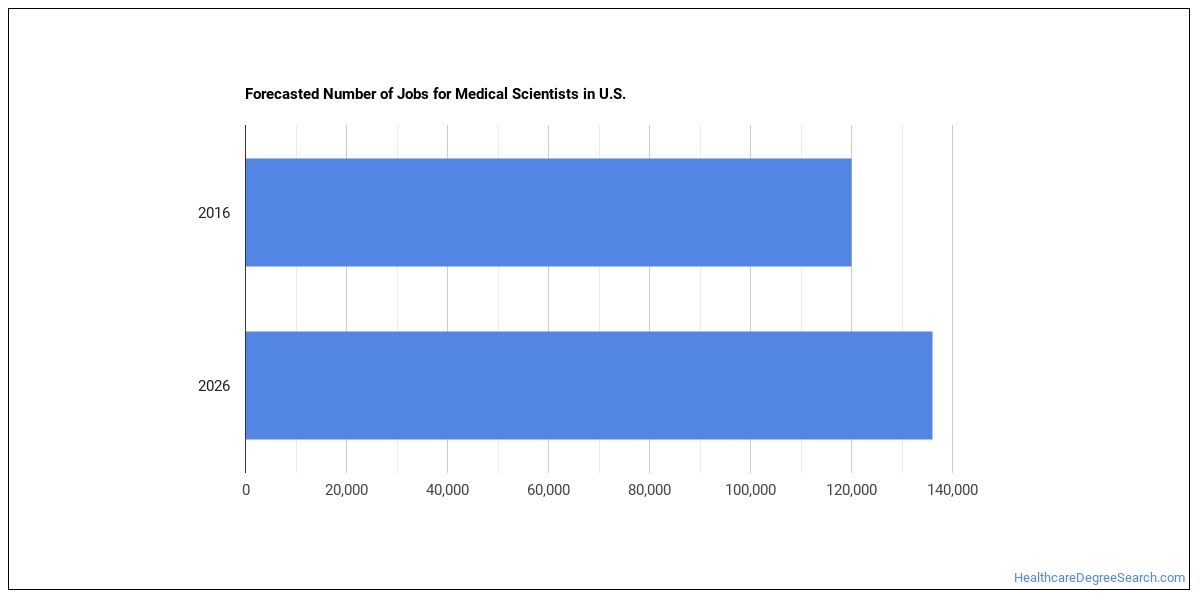
The U.S. employs around 115,486 medical scientists, except epidemiologists working in the United States today. Employment is projected to grow by +8.9% over the projection horizon.
Salary for Medical Scientists, Except Epidemiologists
| Statistic | Value |
|---|---|
| Annual median | $111,314 |
| Hourly median | $53.52 |
| 10th percentile | $68,983 |
| 25th percentile | $90,148 |
| 75th percentile | $132,479 |
| 90th percentile | $153,644 |
Pay can vary substantially based on experience, location, and industry.

Pay by State
| State | Annual median salary |
|---|---|
| California | $131,430 |
| Massachusetts | $129,230 |
| Connecticut | $128,140 |
| New Jersey | $127,210 |
| District of Columbia | $110,830 |
| Maine | $107,950 |
| Rhode Island | $104,330 |
| North Carolina | $104,300 |
| Maryland | $103,500 |
| Arizona | $102,250 |
| Washington | $101,140 |
| Alaska | $100,960 |
| Nevada | $100,580 |
| Oregon | $99,540 |
| Pennsylvania | $99,440 |
| Florida | $98,240 |
| Delaware | $97,640 |
| Missouri | $96,880 |
| Kansas | $96,150 |
| Tennessee | $95,580 |
| Virginia | $95,080 |
| Georgia | $94,320 |
| New Hampshire | $92,490 |
| South Carolina | $87,870 |
| Iowa | $85,010 |
| New York | $84,950 |
| West Virginia | $84,350 |
| Minnesota | $83,450 |
| Michigan | $81,300 |
| Wisconsin | $80,940 |
| Ohio | $79,470 |
| Oklahoma | $79,370 |
| Utah | $78,570 |
| Illinois | $78,430 |
| Texas | $78,410 |
| Indiana | $77,220 |
| South Dakota | $77,070 |
| Colorado | $76,770 |
| Nebraska | $76,030 |
| North Dakota | $75,870 |
| Idaho | $75,580 |
| Kentucky | $73,220 |
| Vermont | $67,410 |
| Montana | $67,120 |
| Alabama | $65,750 |
| Arkansas | $64,730 |
| New Mexico | $60,680 |
| Mississippi | $49,220 |
| Puerto Rico | $47,520 |
Where Medical Scientists, Except Epidemiologists Earn the Most
Compensation for medical scientists, except epidemiologists vary by region. The following regions pay the most:
| Region | Median annual wage | Share of U.S. jobs | Location quotient |
|---|---|---|---|
| New England | $127,447 | 12.4% | 3.84 |
| Far Western US | $122,600 | 21.4% | 1.41 |
| Middle Atlantic | $102,343 | 19.5% | 1.42 |
| Southeast | $91,104 | 15.2% | 0.81 |
| Plains States | $85,961 | 7.6% | 1.66 |
| Southwest | $80,272 | 8.7% | 0.75 |
| Great Lakes | $79,527 | 11.6% | 0.83 |
| Rocky Mountains | $76,721 | 3.4% | 0.96 |
Highest-Paying Metro Areas for Medical Scientists, Except Epidemiologists
| Metro area | State | Median annual wage | Employment |
|---|---|---|---|
| Vallejo, CA | CA | $158,810 | 90 |
| San Jose-Sunnyvale-Santa Clara, CA | CA | $155,990 | 1,600 |
| Syracuse, NY | NY | $153,890 | 150 |
| Santa Cruz-Watsonville, CA | CA | $144,660 | 100 |
| San Francisco-Oakland-Fremont, CA | CA | $142,540 | 6,870 |
| Santa Rosa-Petaluma, CA | CA | $139,110 | 140 |
| Eugene-Springfield, OR | OR | $137,200 | 90 |
| Modesto, CA | CA | $136,180 | 100 |
Industry Breakdown
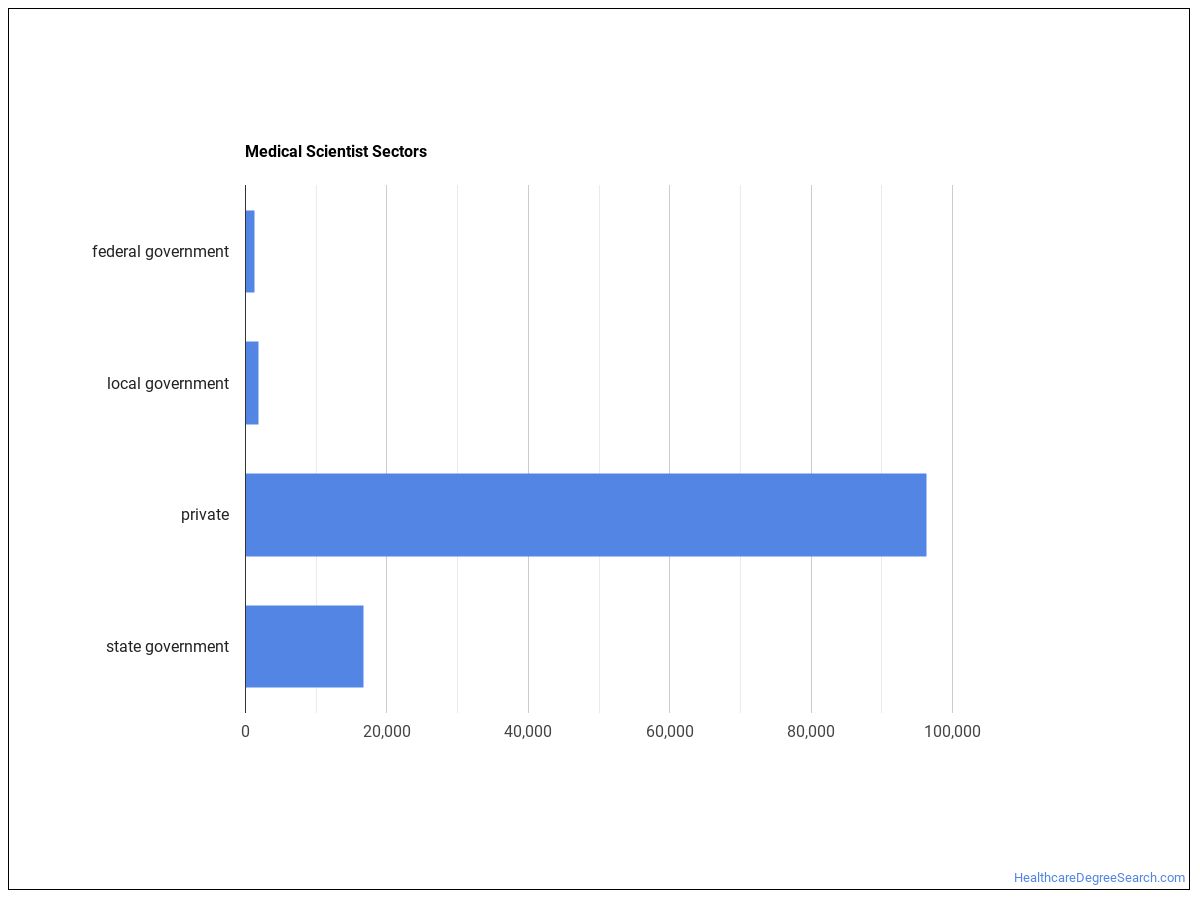
Most medical scientists, except epidemiologists work in these industries:
| Industry | Employment | Median annual wage |
|---|---|---|
| Professional, Scientific, and Technical Services | 60,550 | $120,890 |
| Health Care and Social Assistance | 54,000 | $96,280 |
| Educational Services | 24,330 | $76,120 |
| Manufacturing | 6,360 | $112,120 |
| Wholesale Trade | 4,750 | $164,100 |
| Management of Companies and Enterprises | 1,700 | $125,530 |
| Administrative and Support and Waste Management and Remediation Services | 1,620 | $94,610 |
| Other Services (except Public Administration) | 430 | $100,960 |
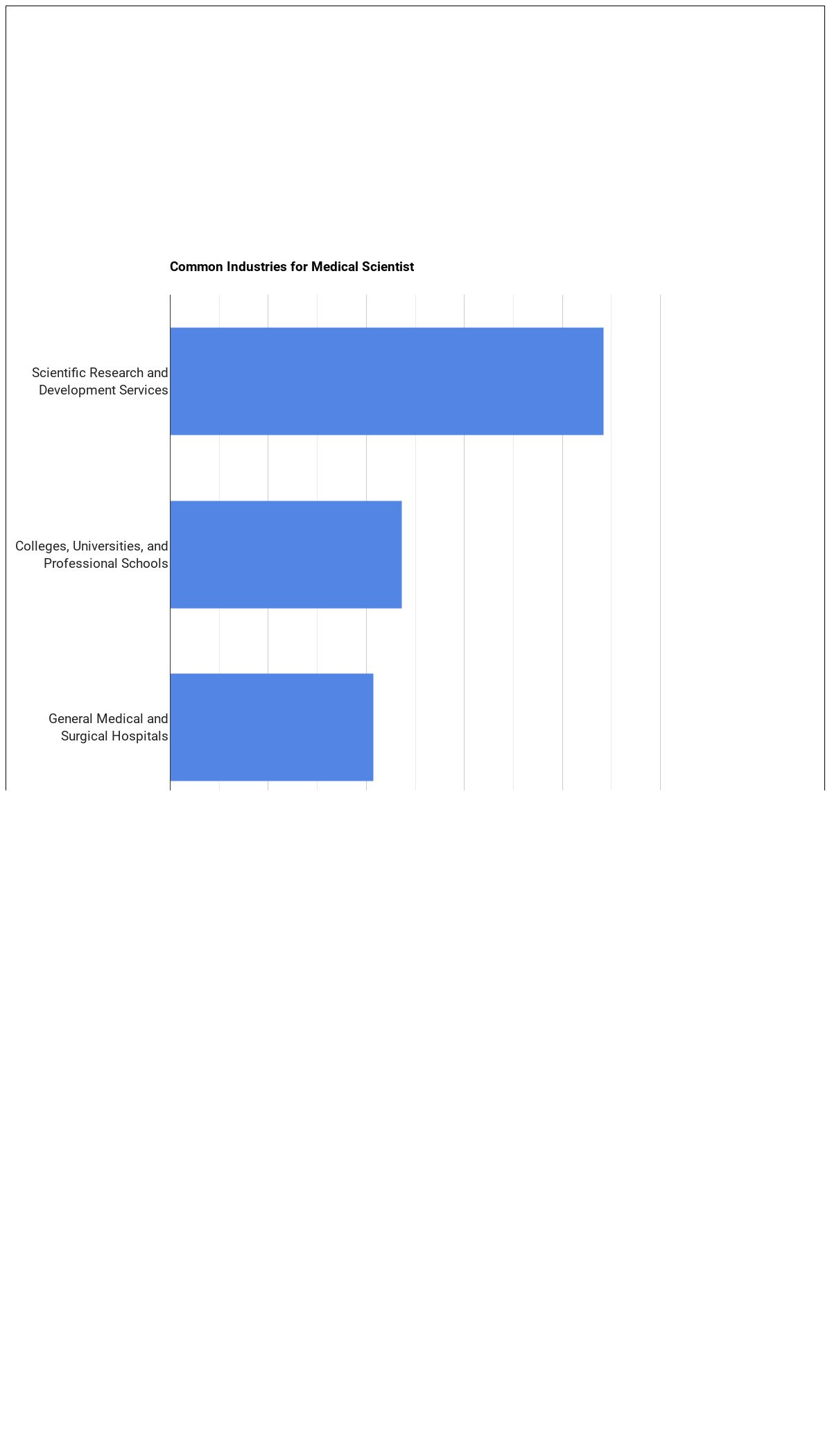
Below are examples of industries where medical scientists, except epidemiologists work:
Tech Stack
- Graphics or photo imaging software: Adobe Photoshop (hot technology)
- Geographic information system: ESRI ArcGIS software (hot technology)
- Analytical or scientific software: IBM SPSS Statistics (hot technology)
- Operating system software: Linux (hot technology)
- Spreadsheet software: Microsoft Excel (hot technology)
- Office suite software: Microsoft Office software (hot technology)
- Presentation software: Microsoft PowerPoint (hot technology)
- Project management software: Microsoft Project (hot technology)
- Development environment software: Microsoft Visual Basic (hot technology)
- Word processing software: Microsoft Word (hot technology)
- Object or component oriented development software: Python (hot technology)
- Object or component oriented development software: R (hot technology)
The Day-to-Day Environment
The work environment for medical scientists, except epidemiologists is shaped by the following characteristics:
- Face-to-Face Discussions with Individuals and Within Teams
- Indoors, Environmentally Controlled
- Work With or Contribute to a Work Group or Team
- Contact With Others
Education and Training
This career aligns with Extensive Preparation Needed (Job Zone 5), reflecting the level of preparation typically expected.
Other Careers to Consider
Similar Occupations
- Clinical Research Coordinators (Supplemental)
- Bioengineers and Biomedical Engineers (Supplemental)
- Biochemists and Biophysicists (Primary-Short)
- Microbiologists (Primary-Short)
- Bioinformatics Scientists (Supplemental)
- Molecular and Cellular Biologists (Primary-Long)
- Geneticists (Primary-Short)
- Epidemiologists (Primary-Long)
Top Programs to Study For This Career
Future medical scientists, except epidemiologists often complete programs in:
Health Professions and Related Programs
9 programs across 3 majors
References
Statistics shown above are sourced from the following authoritative sources:
- U.S. Bureau of Labor Statistics — Occupational Employment and Wage Statistics (OEWS) for employment and wage data by state and industry.
- BLS Employment Projections for total employment and growth forecasts.
- O*NET (Occupational Information Network) for skills, knowledge, tasks, work activities, work context, technology, and education-zone data.
SOC code: 19-1042.00 (Medical Scientists, Except Epidemiologists).

HealthcareDegreeSearch.com provides higher-education, college and university, degree, program, career, salary, and other helpful information to students, faculty, institutions, and other internet audiences. Presented information and data are subject to change. Inclusion on this website does not imply or represent a direct relationship with the company, school, or brand. Information, though believed correct at time of publication, may not be correct, and no warranty is provided. Contact the schools to verify any information before relying on it. Financial aid may be available for those who qualify. The displayed options may include sponsored or recommended results, not necessarily based on your preferences.
© HealthcareDegreeSearch.com – All Rights Reserved.