Physicists: Job Description
Conduct research into physical phenomena, develop theories on the basis of observation and experiments, and devise methods to apply physical laws and theories.
Featured schools near , edit
What Tasks Do Physicists Perform?
Typical responsibilities of physicists span:
- Perform complex calculations as part of the analysis and evaluation of data, using computers.
- Analyze data from research conducted to detect and measure physical phenomena.
- Describe and express observations and conclusions in mathematical terms.
- Design computer simulations to model physical data so that it can be better understood.
- Write research proposals to receive funding.
- Teach physics to students.
- Report experimental results by writing papers for scientific journals or by presenting information at scientific conferences.
What Physicists Need to Know
Top physicists combine a mix of skills and domain knowledge.
Most Important Skills
The competencies that matter most in this role, rated on an importance scale of 0 to 5:
Knowledge Areas
Types of Physicists Jobs
People in this occupation may also be known by titles such as:
- Aerodynamicist
- Aerophysicist
- Astrophysicist
- Atmospheric Physicist
- Atomic Spectroscopist
- Biophysics Scientist
- Cloud Physicist
- Computational Physicist
How Many Physicists Are There?
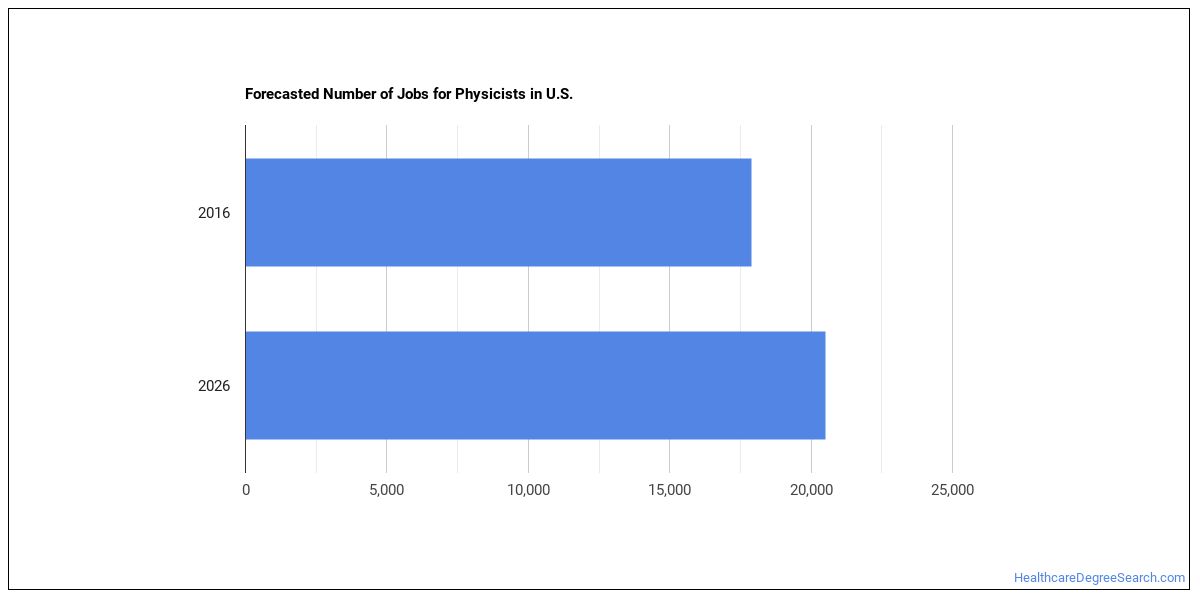
There are roughly 109,390 physicists working in the United States today. Employment is projected to grow by +8.5% over the projection horizon.
Salary for Physicists
| Statistic | Value |
|---|---|
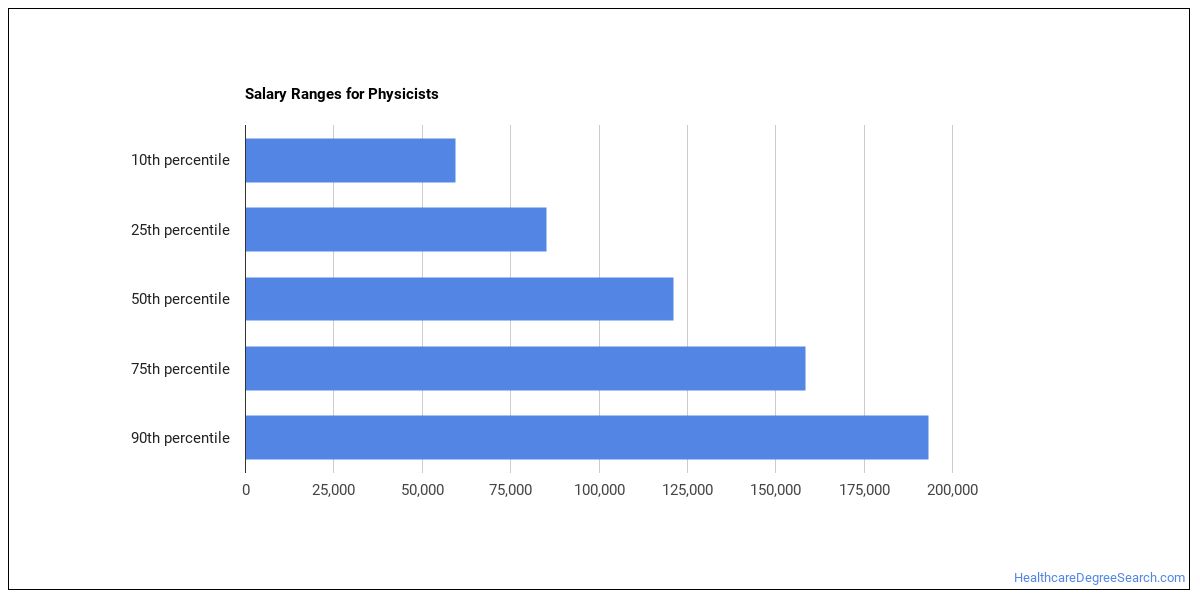
| Annual median | $111,776 |
| Hourly median | $53.74 |
| 10th percentile | $66,634 |
| 25th percentile | $89,205 |
| 75th percentile | $134,347 |
| 90th percentile | $156,918 |
Pay can vary substantially based on experience, location, and industry.
How Much Do Physicists Make in Different U.S. States?
| State | Annual median salary |
|---|---|
| Minnesota | $222,550 |
| Florida | $209,020 |
| Pennsylvania | $208,470 |
| Arizona | $190,960 |
| Oregon | $183,860 |
| California | $180,900 |
| Missouri | $180,450 |
| New Hampshire | $179,440 |
| New Mexico | $175,960 |
| New York | $174,160 |
| Wisconsin | $174,010 |
| Tennessee | $173,660 |
| Connecticut | $171,630 |
| North Carolina | $170,690 |
| Texas | $170,450 |
| Kentucky | $168,660 |
| New Jersey | $168,610 |
| Virginia | $164,180 |
| Maryland | $163,950 |
| Massachusetts | $153,890 |
| District of Columbia | $153,340 |
| Colorado | $144,670 |
| Ohio | $135,550 |
| Utah | $133,900 |
| Idaho | $132,060 |
| Arkansas | $131,880 |
| Georgia | $131,500 |
| Illinois | $131,260 |
| South Carolina | $131,100 |
| Iowa | $120,810 |
| Mississippi | $120,640 |
| Washington | $120,080 |
| Nevada | $116,080 |
| Alabama | $114,690 |
| Maine | $114,610 |
| Indiana | $110,410 |
| Michigan | $107,640 |
| Oklahoma | $84,570 |
| Delaware | $82,780 |
| South Dakota | $78,390 |
Where Physicists Earn the Most
Pay for physicists vary by region. The following regions pay the most:
| Region | Median annual wage | Share of U.S. jobs | Location quotient |
|---|---|---|---|
| Far Western US | $177,089 | 32.1% | 2.35 |
| Southwest | $171,869 | 7.5% | 3.33 |
| Middle Atlantic | $170,907 | 19.4% | 2.51 |
| New England | $156,887 | 3.2% | 1.02 |
| Southeast | $155,127 | 14.4% | 1.34 |
| Plains States | $154,808 | 1.4% | 0.37 |
| Rocky Mountains | $142,603 | 6.4% | 2.52 |
| Great Lakes | $130,085 | 15.7% | 1.40 |
Top Metro Areas
| Metro area | State | Median annual wage | Employment |
|---|---|---|---|
| Nashville-Davidson–Murfreesboro–Franklin, TN | TN | $226,750 | |
| Cleveland, OH | OH | $225,930 | 170 |
| Miami-Fort Lauderdale-West Palm Beach, FL | FL | $219,070 | |
| Minneapolis-St. Paul-Bloomington, MN-WI | MN | $215,340 | 30 |
| San Jose-Sunnyvale-Santa Clara, CA | CA | $214,520 | 430 |
| Richmond, VA | VA | $212,950 | 50 |
| Houston-Pasadena-The Woodlands, TX | TX | $212,050 | 130 |
| Pittsburgh, PA | PA | $211,600 |
Top Industries Employing Physicists
The largest employers of physicists work in these industries:
| Industry | Employment | Median annual wage |
|---|---|---|
| Professional, Scientific, and Technical Services | 11,260 | $166,290 |
| Educational Services | 2,820 | $109,250 |
| Health Care and Social Assistance | 2,750 | $225,930 |
| Manufacturing | 710 | $163,680 |
| Utilities | 110 | $104,200 |
| Management of Companies and Enterprises | 30 | $170,480 |
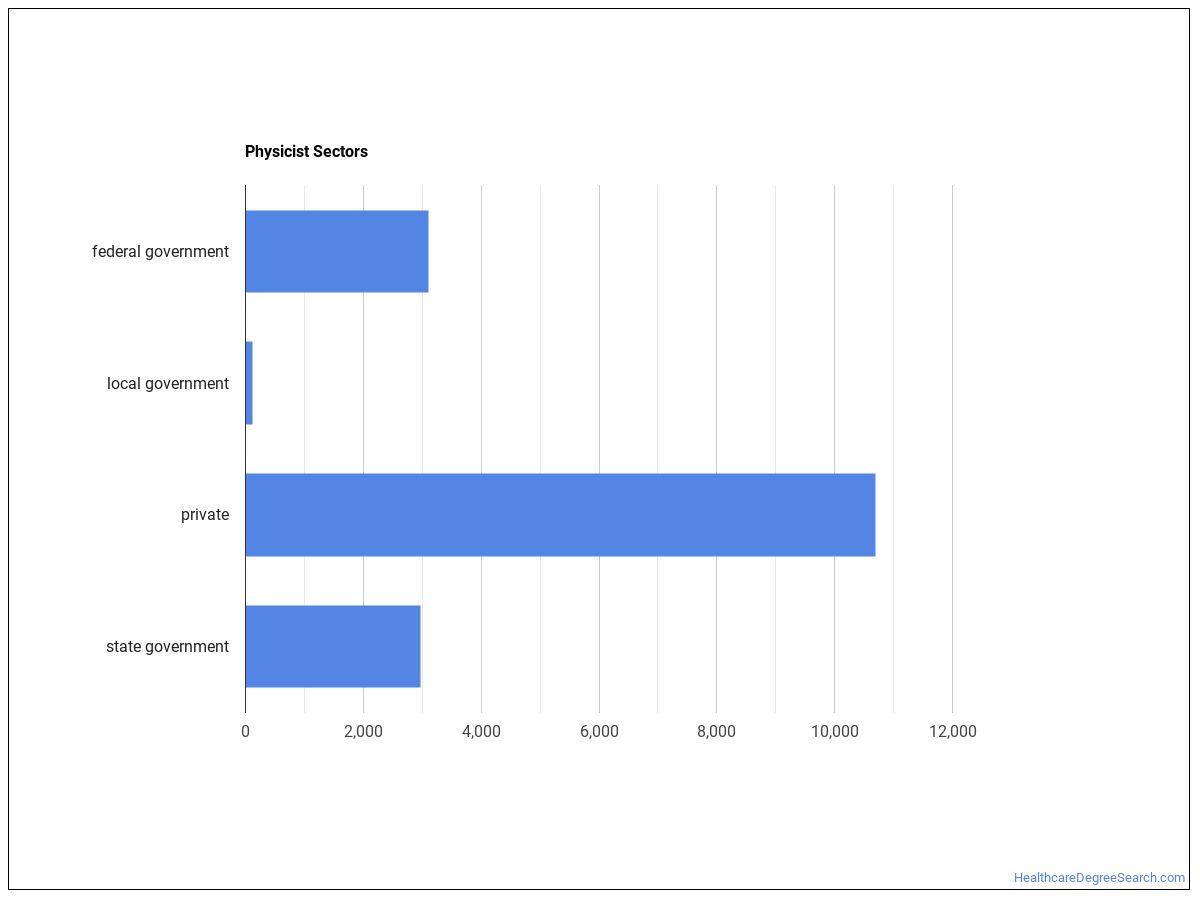
Below are examples of industries where physicists work:

Tech Stack
- Graphics or photo imaging software: Adobe Photoshop (hot technology)
- Data base user interface and query software: Amazon Web Services AWS software (hot technology)
- Expert system software: Ansible software (hot technology)
- Computer aided design CAD software: Autodesk AutoCAD (hot technology)
- Development environment software: C (hot technology)
- Object or component oriented development software: C++ (hot technology)
- Development environment software: Eclipse IDE (hot technology)
- Enterprise application integration software: Extensible markup language XML (hot technology)
- File versioning software: Git (hot technology)
- Web platform development software: JavaScript (hot technology)
- Operating system software: Linux (hot technology)
- Data base user interface and query software: Microsoft Access (hot technology)
Work Environment
The work environment for physicists reflects the following characteristics:
- Spend Time Sitting
- Determine Tasks, Priorities and Goals
- Freedom to Make Decisions
- Face-to-Face Discussions with Individuals and Within Teams
How to Become Physicists
This career aligns with Extensive Preparation Needed (Job Zone 5), indicating the level of preparation typically expected.
Related Careers
Similar Occupations
- Computer and Information Research Scientists (Supplemental)
- Mathematicians (Primary-Short)
- Statisticians (Supplemental)
- Data Scientists (Primary-Short)
- Aerospace Engineers (Supplemental)
- Bioengineers and Biomedical Engineers (Supplemental)
- Chemical Engineers (Supplemental)
- Nuclear Engineers (Supplemental)
Top Programs to Study For This Career
Aspiring physicists commonly pursue programs in:
Health Professions and Related Programs
1 programs across 1 majors
About the Data
Data on this page comes from the following authoritative sources:
- U.S. Bureau of Labor Statistics — Occupational Employment and Wage Statistics (OEWS) for employment and wage data by state and industry.
- BLS Employment Projections for total employment and growth forecasts.
- O*NET (Occupational Information Network) for skills, knowledge, tasks, work activities, work context, technology, and education-zone data.
SOC code: 19-2012.00 (Physicists).

HealthcareDegreeSearch.com provides higher-education, college and university, degree, program, career, salary, and other helpful information to students, faculty, institutions, and other internet audiences. Presented information and data are subject to change. Inclusion on this website does not imply or represent a direct relationship with the company, school, or brand. Information, though believed correct at time of publication, may not be correct, and no warranty is provided. Contact the schools to verify any information before relying on it. Financial aid may be available for those who qualify. The displayed options may include sponsored or recommended results, not necessarily based on your preferences.
© HealthcareDegreeSearch.com – All Rights Reserved.